

Twenty-two years on a fire truck teaches you a few things about metal that heats up fast, and about not trusting a tool until you've run it through real conditions more than once. So when my daughter gave me a set of LANNEY flat stainless steel skewers last spring for Father's Day, my first move wasn't to fire up the grill. It was to turn one over in my hand, check the weld where the handle ring meets the blade, and think about every bent, warped, food-spinning skewer I'd fought with over twenty years of Sunday cookouts here on the coast.
I'm Curtis Boone, retired from the Wilmington-area fire service, and I've been running the grill for family gatherings since before my kids could reach the propane valve. That first LANNEY skewer passed the hand test. What I really wanted to know was whether a dozen of them, plus the bonus 14-inch ones tossed into the pack, would survive a full season of shrimp boils, steak kabobs, and the kind of crowded family cookouts where somebody always overloads their skewer with three onion chunks too many.
The Quick Verdict
A genuinely well-made flat skewer set that solved my food-spinning problem for good, held up through an entire season of coastal cooking, and costs less than a tank of grill propane.
Amazon Check Today's Price →Stop chasing rotisserie chicken chunks around your grill grate.
If you've ever flipped a skewer only to watch every piece of food spin in place instead of turning with it, a flat blade fixes that on the first try, not the tenth.
Amazon Check Today's Price on Amazon →How I've Used It
We eat outside on this coast from April through late October, weather and hurricane season allowing, and my grill sees action most weekends in that stretch. That means the LANNEY skewers went straight into rotation for steak and pepper kabobs, then shrimp when my brother-in-law brought a cooler back from a trip out past Southport, then chicken and pineapple for my granddaughter's birthday cookout in June. By my count, that dozen skewers has gone through the grill somewhere north of thirty times since I unboxed them.
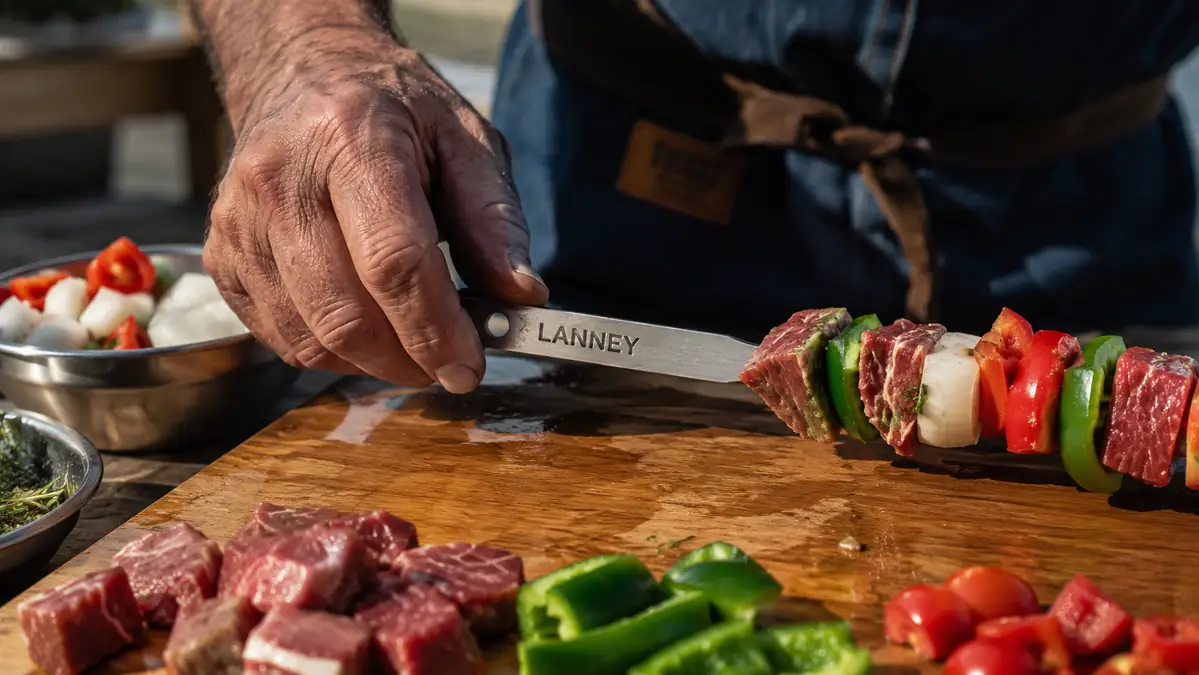
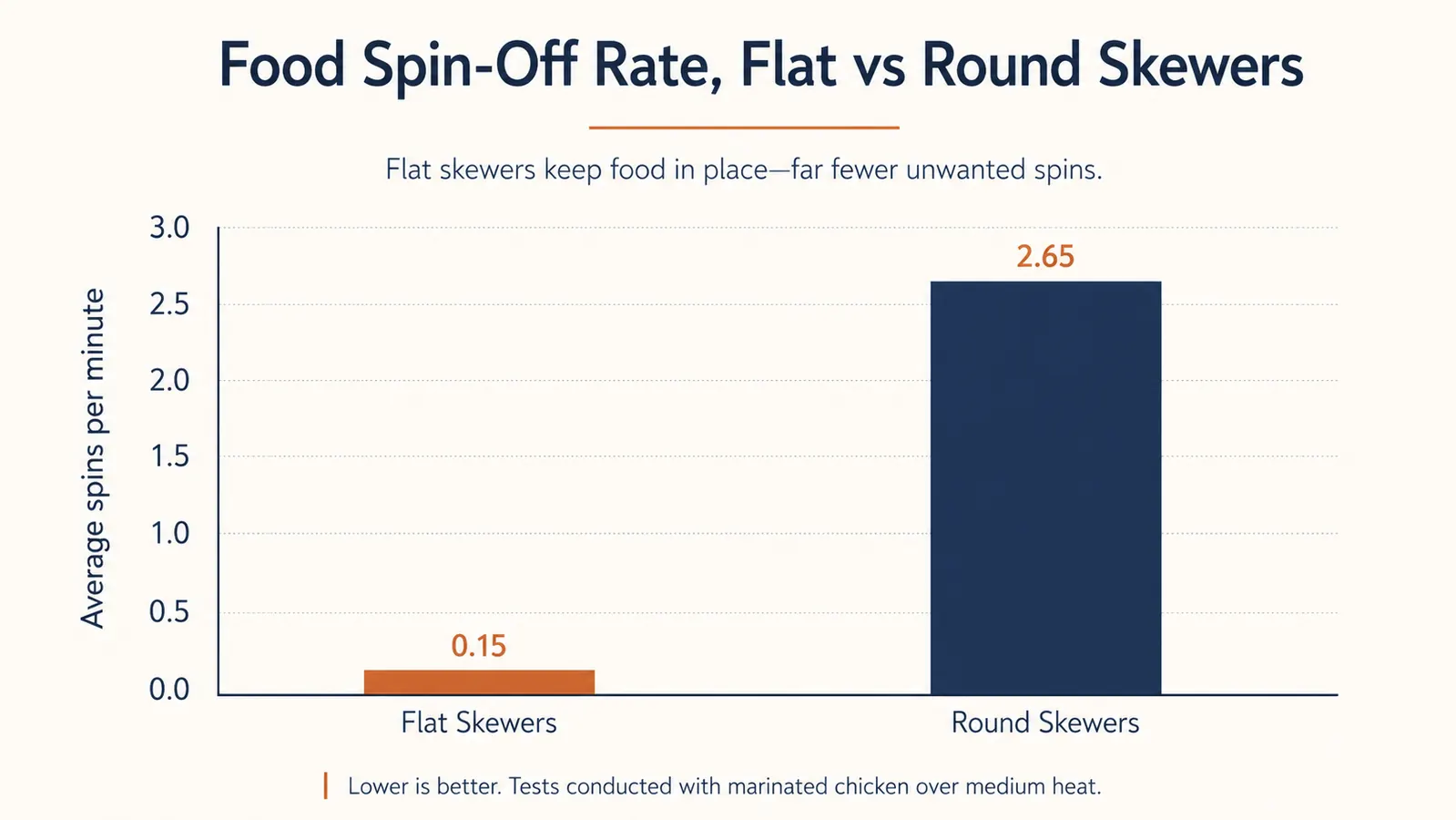
The flat design is the whole reason I kept reaching for these instead of the round bamboo ones I'd used for years. On a round skewer, a chunk of shrimp or a slippery piece of marinated chicken will spin in place the second you try to flip it, which means one side gets a good sear and the other side stays pale and sad. The LANNEY skewers are flat like a thin blade, roughly a quarter inch wide, and that flat surface grips the food instead of letting it rotate. First cookout, first flip, I noticed the difference and said so out loud to my wife Donna, who has heard me complain about spinning shrimp for two decades.
Setup is about as simple as kitchen gear gets. There's no assembly, no soaking required the way bamboo demands, and no worrying about a wooden skewer catching fire on the far side of a hot grate while you're flipping the near side. I pull them straight from the drawer, load them at the counter, and they go right onto a preheated grill. The bonus 14-inch skewers that came in the LANNEY pack have been handy for smaller portions or for my grandkids' plates, where a full 17-inch skewer loaded with adult-sized chunks is more than a nine-year-old wants to deal with.
The Flat Blade, the Rings, and What LANNEY Got Right
I mentioned the flat blade already because it's the headline feature, but the handle ring at the end matters almost as much and gets talked about a lot less. Each LANNEY skewer ends in a small welded loop instead of just a bare point, which does two things. It keeps the skewer from sliding all the way through your hand when you're loading fifteen pieces of food onto a wobbly blade, and it gives you a place to hang the finished skewer off the side of a bowl while you load the next one. That second use sounds minor until you're prepping for a dozen people and you need somewhere to rest a loaded skewer without setting it flat on the counter and rolling the food off.
The stainless steel itself has held its finish better than I expected for something in this price range. After a season that included a memorable low-country shrimp boil where Old Bay seasoning got into everything, a few marinades heavy on soy sauce and citrus, and one grill fire scare that I'll get to in a minute, the skewers still look close to new. No pitting, no discoloration along the flat face where the heat concentrates, and the only blemish I've seen is a touch of freckling near the welds when I left them sitting damp in the rack overnight, which a quick scrub sorted out. That matters to a guy who spent two decades watching cheap metal fail under repeated heat cycles on a truck.
At 17 inches, the standard skewers in the LANNEY set are long enough to load six or seven substantial chunks without crowding the ends, which is the sweet spot for even cooking. I've used shorter skewers in the past where you're forced to jam everything together, and the pieces in the middle steam each other instead of getting real grill contact. The extra length here gives food room to breathe, and I noticed my kabobs coming off with better char on all sides once I switched.
A Full Season of Shrimp Boils, Steak Kabobs, and Family Cookouts
The real test wasn't the first cookout, it was the accumulation. By July, these skewers had already handled a Memorial Day steak kabob spread, two separate shrimp nights, a chicken and pineapple birthday cookout, and enough weekend odds and ends that I'd honestly lost count. That's the kind of repeated, unglamorous use that tells you whether a tool is worth keeping or whether it's headed for the give-away pile by August.
The one incident worth mentioning happened at that Memorial Day cookout, and it's a story I've told at the firehouse reunion since. I had a skewer loaded with marinated flank steak sitting a little too close to a flare-up from dripping fat, and for about ten seconds I had actual flames licking up around the food. Old habits kicked in, I pulled the skewer, moved it to the cool side of the grate, and let the flare-up die down. What I noticed afterward was that the flat stainless blade hadn't warped even a little from that direct flame exposure, which is more than I can say for a couple of cheaper round skewers I've bent clean out of shape over the years just from normal grilling heat.
By late summer, the pattern was clear. Food stopped spinning on the flip, which meant even searing on both sides without me babysitting every single skewer. Cleanup got faster too, since a flat surface wipes down easier than a round one where marinade tends to collect in a thin film all the way around. I run mine through the dishwasher's top rack most weeks, though I hand wash them after anything heavily seasoned like the shrimp boil marinade, just out of habit from years of not trusting a dishwasher to fully rinse strong spices.
Cleaning, Storage, and the Small Stuff That Adds Up
Storage is where I'll admit the LANNEY skewers ask a little more of you than a bag of disposable bamboo sticks. They're metal, they're 17 inches long, and a dozen of them plus the bonus shorter ones don't fit neatly into a kitchen drawer unless you've got a long one to spare. I ended up keeping mine in the cardboard sleeve they shipped in, tucked into a cabinet near the grill tools, which works fine but isn't elegant. If you're tight on storage space, that's worth planning for before you buy.
The handle rings I mentioned earlier double as a hanging point, and I've thought more than once about screwing a couple of cup hooks into the inside of my grill cart to hang them there instead. Haven't gotten around to it yet, but it would solve the storage question completely and keep them right where I use them.
One small thing I appreciated: LANNEY includes enough skewers in the set, twelve of the 17-inch plus the bonus 14-inch ones, that I've never run short mid-cookout, even hosting eight or nine people. I used to run out of bamboo skewers halfway through prep and end up jamming extra food onto the ones already loaded. That hasn't happened since I switched.
Tradeoffs I Ran Into
Nothing's perfect, and I'd rather tell you where this set falls short than pretend it's flawless. The flat blades, while great for preventing spin, are sharper at the tip than I expected out of the box. I nicked a thumb loading a skewer in a hurry during that birthday cookout, nothing serious, just a reminder that these aren't the blunt bamboo sticks you can hand to a distracted teenager without a word of caution. If you've got younger kids helping with prep, I'd supervise the loading step.
They also get genuinely hot on the grill, more than bamboo ever did, since it's solid metal conducting heat the entire length of the skewer. I keep a pair of tongs or a folded towel handy for pulling them off, and I'd never grab the middle of one bare-handed straight off a hot grate. That's common sense for anyone who's spent time around fire, but it's worth saying plainly for anyone new to metal skewers.
And as I mentioned, storage is a minor hassle compared to a disposable bag of bamboo you can just toss in a drawer. These are a long-term kitchen tool, not a grab-and-forget item, and today's price reflects that. It's a small investment relative to what you'd spend replacing bamboo skewers every season, but it's not nothing, so I'd check current pricing and decide if that tradeoff makes sense for how often you actually grill kabobs.

What I Considered Instead
Before I settled into using the LANNEY set as my main skewers, I thought about a couple of alternatives. Round stainless skewers were the obvious comparison, since I'd used a cheap round set for a couple of years before this. They're fine for lighter food like whole shrimp that grip the skewer better on their own, but for steak cubes or thick pepper chunks, the spinning problem I mentioned earlier never went away with round blades. That's the single biggest reason I moved to flat.
I also looked hard at double-pronged skewers, the ones shaped like a narrow U with two parallel prongs instead of one blade. Those solve the spinning issue too, arguably even better since the food is pinned from two points instead of one flat surface. But they're bulkier to load, harder to clean in the tight corner where the two prongs meet, and I found myself avoiding them for quick weeknight kabobs just because loading took longer. The single flat blade on the LANNEY skewers strikes a better balance of speed and grip for how often I actually cook.
Bamboo stayed in the drawer as a backup for the rare occasion I need disposable skewers for a potluck where I don't want metal ones going home in someone else's cooler by accident. But for regular use at my own grill, metal that doesn't need soaking and won't burn through has won out, and this flat design specifically has earned its spot as the set I reach for first.
What We Liked
- Flat blade genuinely stops food from spinning during flips, better sear on both sides
- Held its finish through an entire season of marinades, Old Bay seasoning, and one direct flare-up without warping
- Handle rings make loading and resting skewers easier, and prevent them sliding through your hand
- 17-inch length fits six or seven chunks without crowding for even cooking
- Set includes enough skewers, plus bonus 14-inch ones, that I've never run short mid-cookout
- Dishwasher safe, wipes down faster than round skewers
Where It Falls Short
- Sharper tips than bamboo, nicked my thumb once loading in a hurry
- Gets hot along the whole length on the grill, need tongs or a towel to handle safely
- 17-inch length doesn't fit neatly in a standard kitchen drawer, needs dedicated storage
- A bigger upfront cost than a disposable bag of bamboo skewers, though it pays off over a season
Twenty-two years of watching cheap metal warp under heat taught me to check the weld before I check the price. These passed both tests.
Who This Is For
If you host regular cookouts, whether that's a weekly family dinner on the patio or occasional gatherings for a crowd, and you're tired of chasing spinning shrimp or unevenly seared steak cubes around the grate, the LANNEY flat skewers solve a real, specific problem. They're also a smart pick for anyone who's frustrated with buying bags of bamboo skewers every season only to throw half of them away half-burnt. Twelve skewers plus the bonus set is enough for a decent-sized gathering without running back to the kitchen mid-cook.
Who Should Skip It
If you rarely make kabobs, or you're feeding one or two people occasionally, a cheap bag of disposable bamboo skewers will probably serve you fine and you won't need to think about long-term storage for a set of metal ones. Households with young kids doing their own prep work without close supervision should also weigh the sharper tips and the heat retention before handing these over unsupervised. And if drawer space is already tight in your kitchen, plan for where a 17-inch metal skewer set will actually live before you order.
A whole season in, food still isn't spinning on my grill.
That's the problem these were bought to solve, and they solved it on the first cookout. Check today's price and current availability before your next kabob night.
Amazon Check Today's Price on Amazon →