

I ruined more kabobs than I care to admit before I figured out the actual fix. For years I threaded chicken and peppers onto whatever round bamboo sticks were on sale at the grocery store, laid them across my grate, and watched half of them spin the second I reached over with my tongs. The chicken would char hard on one flat side and stay pale and underdone ninety degrees away from it. I blamed my marinade. I blamed my grill's hot spots. Turns out it wasn't either one. It was the skewer. Once I switched to a 12-pack of LANNEY flat stainless steel skewers, that spinning problem disappeared for good, and my kabobs finally cooked the way they looked like they should on the plate.
This guide walks through the exact process I use now, start to finish, from picking ingredients that cook at roughly the same rate to threading them so they sit flush against the grate instead of rolling around like a pencil on a desk. I'll tell you where I went wrong for years as a weekend griller, and yeah, a few of those years came after twenty on a fire truck, so I really should have understood heat control sooner than I did. I'll also show you exactly where the LANNEY flat skewers changed the outcome without me changing a single other thing about how I cook, what marinade and cutting habits actually matter, and what I still get wrong on a busy night. Grab a pack, fire up the grill, and let's get your kabobs turning out evenly charred outside and juicy all the way through.
Tired of Kabobs That Spin the Second You Look Away?
The LANNEY 17-inch flat stainless skewers are the single change that fixed my uneven kabobs. Twelve long skewers plus a bonus set of shorter ones, wide and flat enough to actually hold food still on the grate.
Amazon Check Today's Price on Amazon →Step 1: Pick a Skewer That Won't Let Your Food Spin
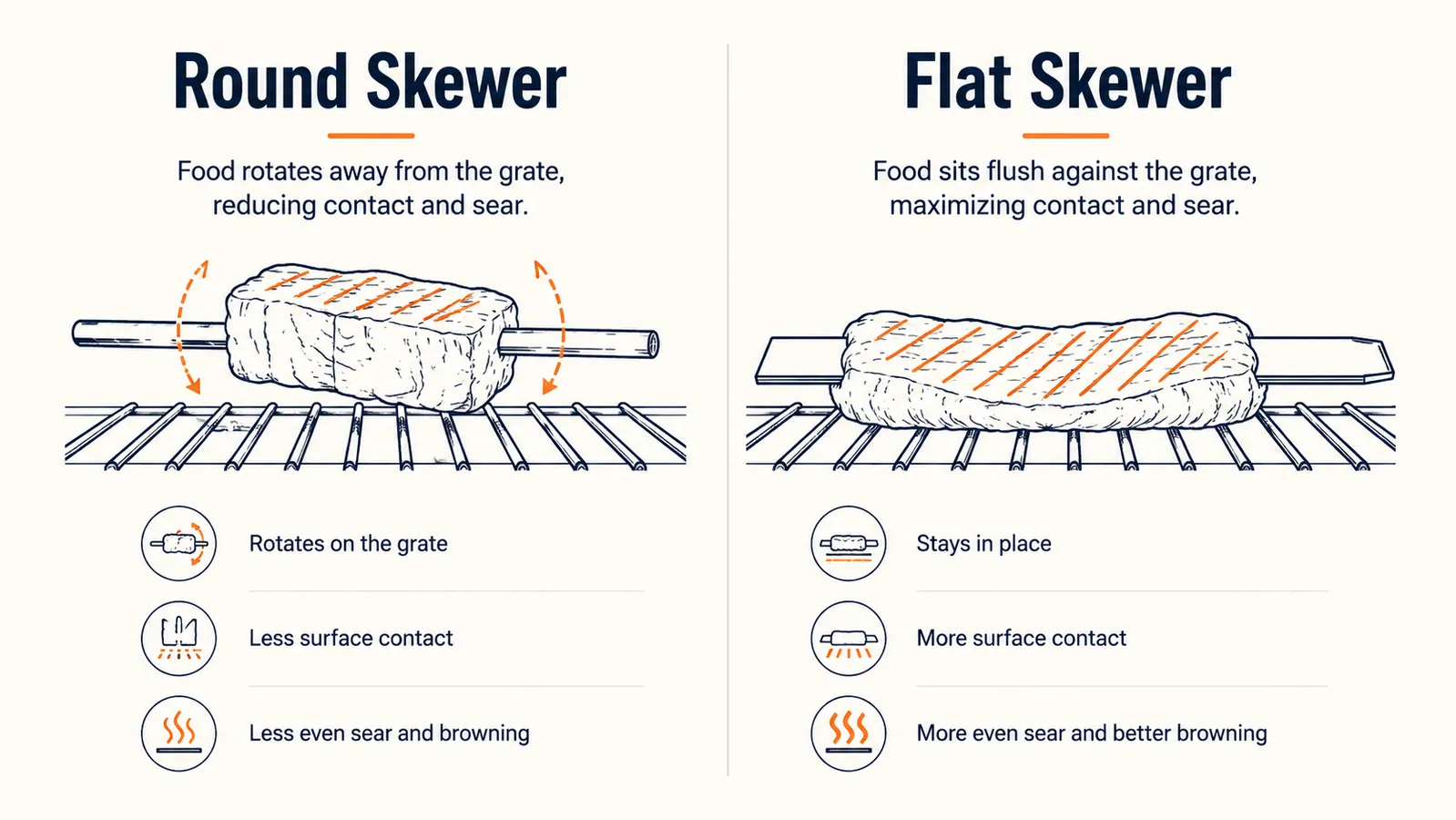
Before you cut a single onion, the skewer you're using decides half your outcome. A round skewer, whether it's bamboo or thin metal, gives food almost nothing to grip. Every time you flip it with tongs or even bump the grill lid, the meat and vegetables rotate freely around that little round shaft. You end up with one seared side and one raw side on the same piece of chicken, which is exactly the problem I fought for years without understanding why.
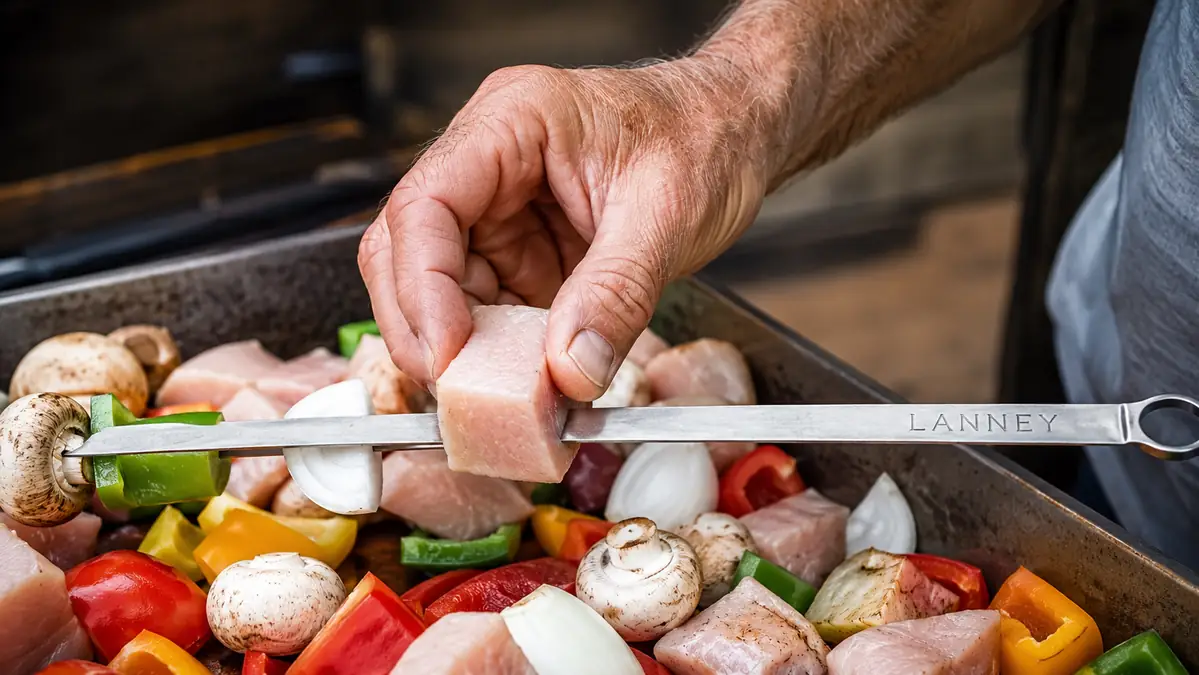
A flat skewer solves this by giving each piece of food two flat surfaces to grip instead of one curved one. The LANNEY skewers are stainless steel, 17 inches long in the main pack with a bonus set of shorter 14-inch ones for smaller cuts, and wide enough that a cube of chicken or a chunk of pepper actually seats itself against the metal instead of spinning loose. I keep a full 12-pack in a kitchen drawer now, which matters more than it sounds like once you're threading for six or eight people on a Saturday and don't want to wash skewers between rounds.
I'll admit I was skeptical the first time my brother-in-law handed me his set at a Fourth of July cookout. I figured a skewer was a skewer. Twenty minutes later I had eight kabobs of shrimp and zucchini come off the grill with clean, even grill marks on every side, no babysitting, no fighting the tongs to keep a piece from twisting back to its raw side. That was the cookout that got me my own set of LANNEY skewers the following week, and I've used them for every kabob night since.
Step 2: Cut Everything to the Same Size and Group by Cook Time
Even the best flat skewer can't fix uneven cutting. Cube your chicken thighs or sirloin into pieces that are all roughly the same size, about an inch and a quarter across. If some pieces are twice the size of others, the small ones will dry out before the big ones finish cooking, and no amount of skewer technology changes that math. I use a ruler exactly once when I'm teaching someone this for the first time, just to calibrate their eye. After that you can do it by feel.
Separate your ingredients by how fast they cook. Chicken, beef, bell peppers, red onion, and zucchini all move at roughly similar speeds and pair well on the same skewer. Cherry tomatoes, mushrooms, and pineapple cook faster and can scorch or turn to mush if they share a skewer with slower-cooking protein. I run a dedicated LANNEY skewer just for the quick-cooking stuff and pull those off the grill a few minutes ahead of the meat-heavy ones. It sounds fussy the first time you hear it, but it takes about ninety seconds longer per cookout and it's the difference between a mushy tomato and a slightly blistered one that still holds its shape.
If you're working with dense vegetables like potato chunks or thick-cut onion, give them a head start. I par-boil small potato pieces for about four minutes before they ever touch a skewer. Otherwise the outside of your kabob chars long before the potato in the middle is anywhere close to done, and you end up serving something that looks finished but isn't.
Step 3: Thread the Kabobs So They Sit Flat on the Grate
This is where the flat shape of the LANNEY skewer actually earns its keep. Push each piece of chicken or vegetable onto the skewer so the flat side of the metal runs through the center of the food, not off at an angle. Leave a small gap, about the width of a pencil, between each piece. Food packed edge to edge along the skewer won't get direct heat on the sides that are touching, and you'll end up with pale, steamed patches instead of a clean sear.
Alternate your ingredients with intention rather than just for looks. I like chicken, then red onion, then pepper, then chicken again, because the onion and pepper release a little moisture as they cook that keeps the chicken next to them from drying out. Load 5 to 6 pieces per 17-inch LANNEY skewer, which leaves enough exposed metal on both ends to grab with tongs or a mitt without touching hot food.
One habit I picked up from firehouse cooking, where you're often feeding a dozen hungry guys on a schedule that isn't yours to control, is loading skewers in batches ahead of time and keeping them flat on a sheet pan in the fridge until the grill is ready. Because the LANNEY skewers are flat, they stack neatly on a tray without rolling into each other the way round ones do. That's a small thing, but when you're prepping for a crowd, small things add up to a lot less standing around at the last minute.

Step 4: Season and Oil Right Before the Kabobs Hit the Grate
Marinate your protein separately before threading, not after. A simple mix of olive oil, lemon juice, garlic, and salt for a couple hours in the fridge does most of the work. Once everything is threaded onto the LANNEY skewers, give the whole kabob a light second coat of oil right before it goes on the grill. This isn't about flavor at that point, it's about preventing stick. Vegetables especially will tear their surface and grab onto the grate if they hit it dry, and that tearing is what causes food to twist loose from a skewer mid-cook, flat or not.
Salt your vegetables separately from any marinade that had acid in it, and do it close to grill time. Salted zucchini and onion left to sit too long will weep water, and wet vegetables steam instead of char. I learned that one the hard way at a station cookout where my zucchini came off looking more boiled than grilled. Nobody complained out loud, but I noticed the tray came back mostly full.
Step 5: Grill Over Direct Heat and Turn Once the Grate Releases the Food
Preheat your grill to medium-high, somewhere around 400 to 450 degrees, and use direct heat for kabobs rather than the indirect setup you'd use for a whole chicken. Lay the loaded LANNEY skewers straight across the grate so they're perpendicular to the bars. This keeps the flat side of the skewer making full contact with the grate instead of slipping down between the bars, which happens more often than you'd think with a thin round skewer.
Resist the urge to move the kabobs the moment they hit the heat. Food naturally releases from a hot, clean grate once it's properly seared, usually after 3 to 4 minutes on the first side. If you try to flip before that release happens, you'll tear the surface and drag food off the skewer. Once it turns easily with a light nudge from your tongs, flip once and let the second side go another 3 to 4 minutes. Because the LANNEY skewers are flat, a quarter turn lands the food on a clean new face instead of rolling back to the same spot, which is the whole reason round skewers gave me trouble in the first place.
Check doneness with an instant-read thermometer rather than guessing by color, especially with chicken. I want 165 degrees in the thickest piece before anything comes off the grill. That's not me being overly cautious for the sake of it, that's twenty years of seeing what happens when people trust their eyes over a thermometer instead of a number. Pull the kabobs, let them rest on a platter for about 3 minutes, and the juices settle back into the meat instead of running out onto the plate the second you cut in.
What Else Helps
A clean, well-oiled grate matters as much as the skewer itself. Scrape your grates before preheating and run a folded paper towel dipped in oil over them once they're hot. A sticky grate will fight you no matter how good your skewers are. I also keep a spray bottle of water nearby for flare-ups from dripping marinade, a habit that's pure firehouse instinct at this point and one I'm not going to apologize for.
If you're feeding a crowd, stagger your skewers rather than loading the whole grill at once. Grill the meat-heavy LANNEY skewers first since they take slightly longer, then add the faster vegetable-only ones a few minutes behind them. Everything comes off the grill within a minute or two of each other instead of some kabobs sitting under foil going lukewarm while you wait on the rest.
Cleanup is the last thing anybody wants to think about at the end of a cookout, so I'll say it plainly. The LANNEY skewers go straight into the dishwasher's top rack, which is one more reason I reach for them over disposable bamboo that just gets tossed after one use. Give them a quick scrub if anything's stuck to the flat edges, dry them, and they go right back in the drawer for next weekend.
The skewer was never the boring part of the recipe. It was the part I got wrong for years without knowing it.
Give Your Next Cookout Kabobs That Actually Cook Evenly
Everything in this guide depends on starting with a skewer that holds food flat against the grate. The LANNEY 17-inch stainless set is what I've used for every cookout since I made the switch.
Amazon Check Today's Price on Amazon →