
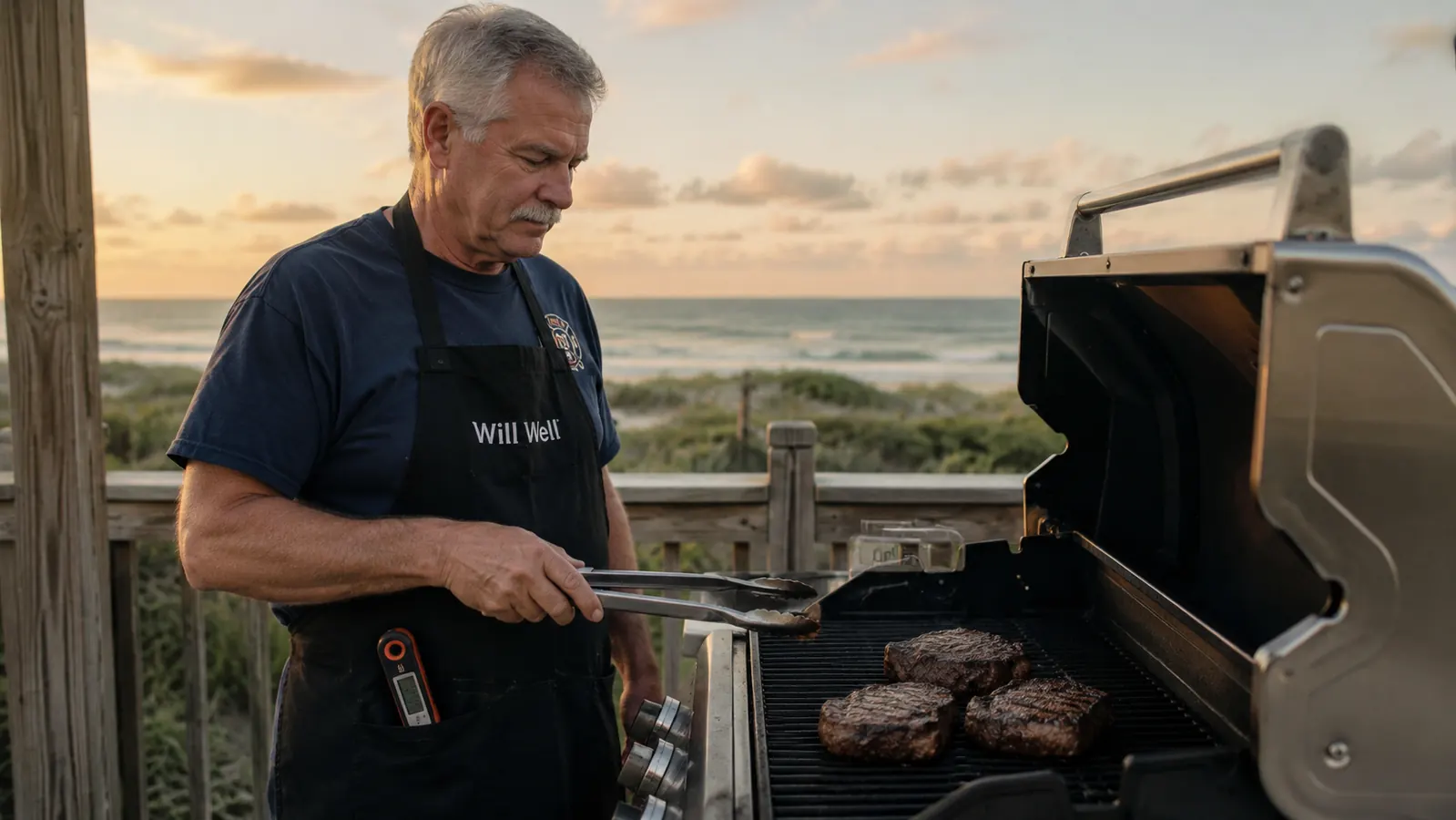
Twenty-two years on a fire engine taught me one thing that carries straight over to a backyard grill: if your gear doesn't have a home, you'll lose it at the exact moment you need it most. I can't count how many Saturday cookouts I spent patting down my pockets, digging through a pile of tools on the side table, or hollering over to Donna to bring me the thermometer because I'd set it down on the porch rail three flips of the chicken ago. The fix turned out to be almost embarrassingly simple. It was a Will Well chef apron with two real pockets, worn the same way every single time I light the grill.
This isn't a review of the Will Well apron, I've written one of those already. This is the system I built around it, the exact routine I use so my tongs, my instant read thermometer, and a clean towel are always exactly where my hand expects them to be, whether I'm working a rack of ribs for twenty people or just grilling burgers for me and my neighbor Frank. If you've ever caught yourself patting your pockets while a hot grate has zero patience for you, this walkthrough is for you.
Stop Patting Down Your Pockets Mid-Cook
The Will Well chef apron is the two-pocket setup this whole system is built around, a durable cotton blend, adjustable 38-inch waist ties, and pockets deep enough to actually hold your gear instead of just your good intentions.
Amazon Check Today's Price on Amazon →Step 1: Take Inventory Before You Ever Put the Apron On
Before you load a single pocket, sit down for five minutes and actually list what you reach for during a typical cook. For me that's an instant read thermometer, a folded shop towel, a butane lighter for the side burner, and a stub of pencil for jotting down cook times on a scrap of paper, because I never trust my memory once I'm three beers and two racks of ribs into a cookout. That's it. Four items. Most of us carry way more junk to the grill than we actually use, and an apron with only two pockets forces you to be honest about that.
My grandsons Eli and Wyatt love handing me things while I cook, a spare spatula, a bottle of sauce, whatever they've decided I need in the moment, and for a while I was stuffing every single thing they handed me into whatever pocket had room. That's how a good system falls apart fast. The Will Well apron's two spacious pockets are generous, but they're not bottomless, and treating them like a junk drawer defeats the whole purpose of wearing one in the first place.
Once you've got your short list, do a quick weight and size check. Lay your actual tools out on the counter and see what fits comfortably in a pocket roughly the size of your palm. A full-size meat thermometer with a folding probe, a lighter, a pen, and a towel all sat fine in my Will Well apron's pockets without bulging or sagging. If something doesn't fit cleanly, it doesn't belong in the pocket rotation, it belongs on the prep table instead.
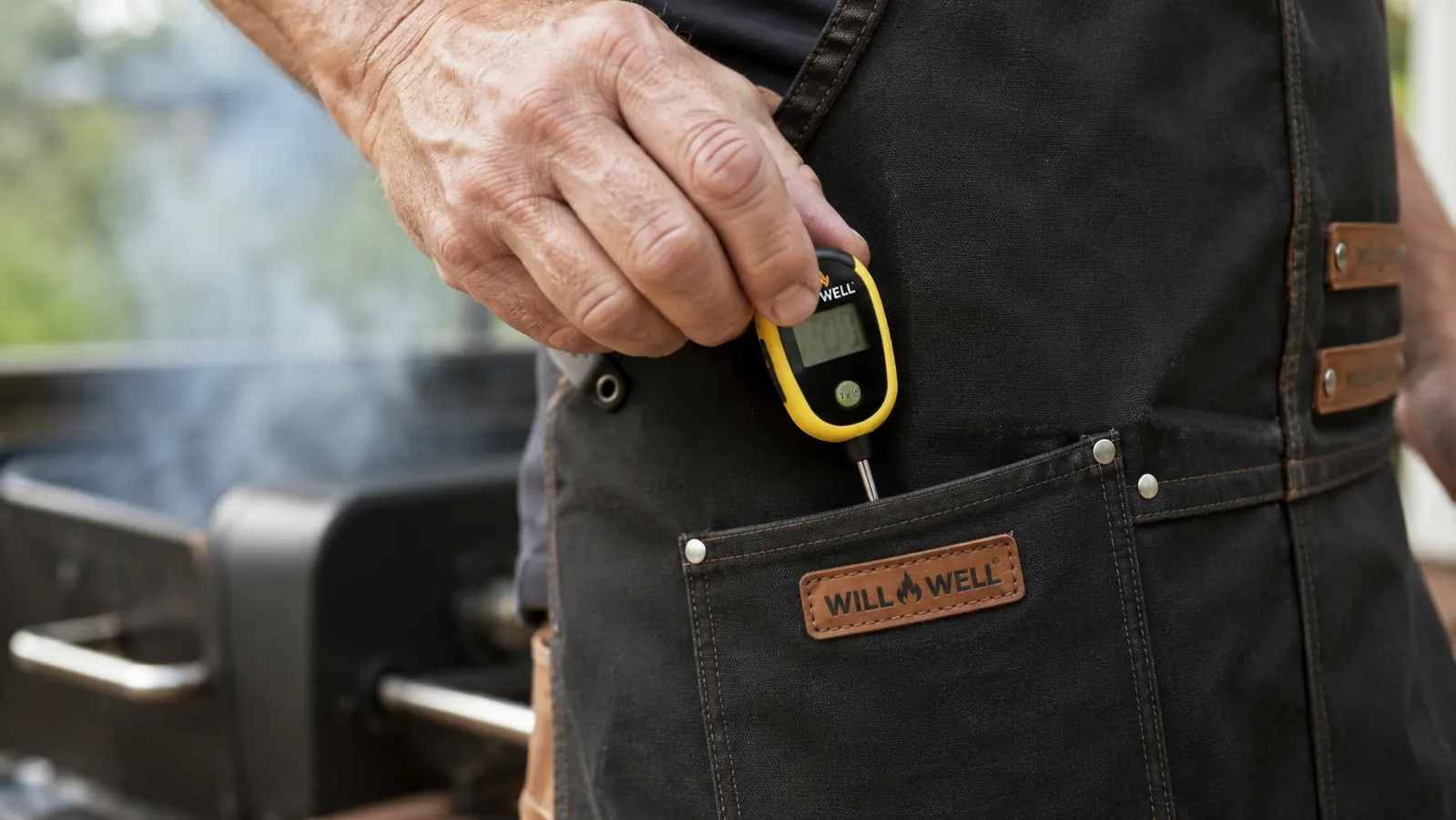
I'll admit the first apron I ever tried this system with was a cheap two-dollar one from a hardware store bin, and it lasted about a month before the stitching gave out on one pocket corner and my lighter fell straight into the coals. That's when I started paying attention to the difference between a pocket that looks deep enough in the store and one that actually holds weight through a full cook. The Will Well apron's pockets are stitched flat across the bottom instead of just folded fabric, which is the small detail that keeps a thermometer from working its way out the side after an hour of bending over the grate.
Step 2: Assign Each Pocket a Job, Not a Free-for-All
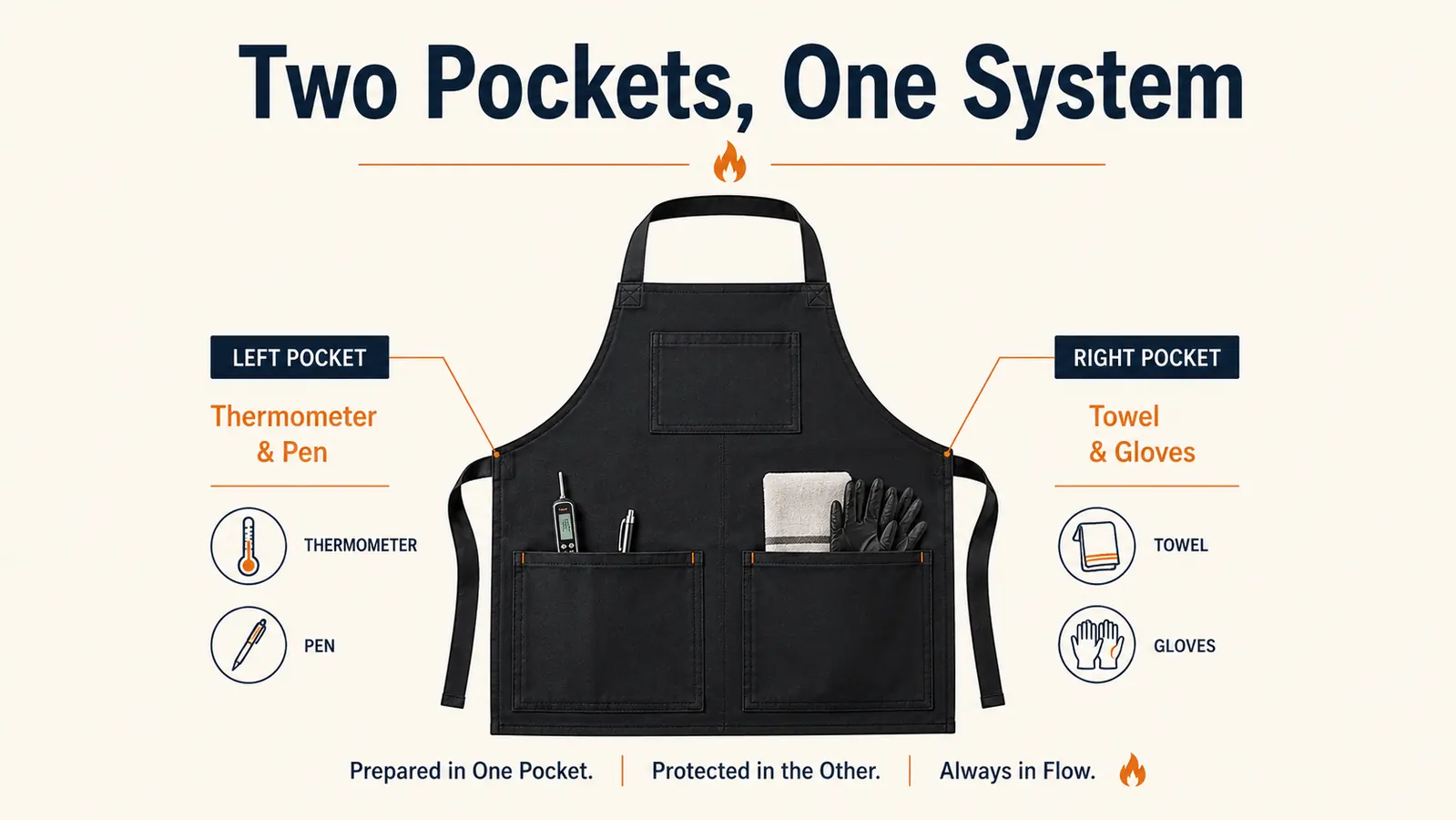
This is the step that actually makes the system work. I keep my thermometer and pencil in the left pocket of the Will Well apron, always, and my folded towel and a spare set of gloves in the right pocket, always. Not sometimes, not depending on my mood that day. The same tool goes in the same pocket every single cook, no exceptions, until reaching for it becomes something your hand does without your brain even weighing in.
There's a reason firehouses hang turnout gear the exact same way on every rig, boots and pants together, coat on the hook above them, helmet on top. Nobody's fumbling for their gear during a call because the layout never changes. A grilling apron works the same way on a much smaller scale. Once your hand learns that the thermometer lives on the left, you stop looking down to check. You just reach, and it's there.
The two pockets on the Will Well apron happen to be sized just right for this kind of split. One pocket handles the tool you need constantly, in my case the thermometer, and the other handles the softer, bulkier item, the towel. If you try to cram both a thermometer and a towel into the same pocket, you'll end up patting yourself down anyway trying to find which one is on top, which is exactly the problem this whole system is supposed to solve.
Step 3: Keep the Heavy Stuff Low, Centered, and Tied Off Right
A loaded apron that isn't tied correctly will sag, twist, and eventually dump your thermometer straight into the grass. The Will Well apron's 38-inch waist ties give you enough length to cinch it snug at the hip rather than letting it hang loose off your shoulders like a smock. I tie mine a notch tighter than feels necessary at first, because once you add a thermometer and a towel to the pockets, that extra weight pulls the whole thing down if the tie isn't secure.
Big Earl, an old fire captain friend of mine, is built a good bit broader than I am, and he was skeptical the tie length would work for him. It did, with room to spare, which matters if you're cooking for a crowd where more than one person might be borrowing the apron over the course of an afternoon. Whoever's wearing it, the goal is the same: pockets sitting at hip level where a hand can drop in naturally, not riding up near your ribs or sagging down by your knees.
One more small adjustment that made a real difference: I cross the ties in back instead of just knotting them straight across my spine. It spreads the weight of a loaded apron across both hips instead of pulling on one spot for three or four hours straight, which matters more than you'd think once you're standing at a hot grill for the length of a full cookout. It took me a couple of tries to get the habit down, but now it's as automatic as tying my boots used to be before a shift.
Step 4: Build a Reset Habit Between Cooks
A system only holds up if resetting it becomes part of shutting the grill down, not a separate chore you do later or skip entirely. Once the food's off the grate, I wipe the thermometer probe clean, fold the towel back the way it goes, and check that the pencil still has a point before it all goes back into the Will Well apron's pockets. That whole reset takes under a minute, and it means the apron is ready to grab again without a scramble the next time someone wants burgers.
My son Danny and his brother-in-law Mark both cook on my grill often enough now that I've made the reset habit part of the deal. If you use the apron, you reload it before you hang it back up. It sounds like a small house rule, but it's the difference between grabbing a ready apron next Saturday and grabbing an empty one, which puts you right back to hunting for a thermometer at the worst possible moment.
Once a month or so I do a slightly deeper check, swapping the thermometer battery before it dies mid-cook, refilling the lighter, and replacing the towel if it's gotten too grease-stained to be useful. It's the same habit I had checking gear before it went back on the rig, and it takes maybe five minutes total for an apron that's ready every time I need it.
Step 5: Wash It and Store It Where You'll Actually See It
The Will Well apron's fabric holds up fine to a regular wash when it gets sauce or grease on it, which around here is most weekends. I turn the pockets inside out first to shake out any crumbs or stray pencil shavings, then run it through a normal cycle. It comes out looking like it hasn't spent a season getting splattered with barbecue sauce and marinade, which is more than I can say for a couple of the plain aprons I wore through before this one.
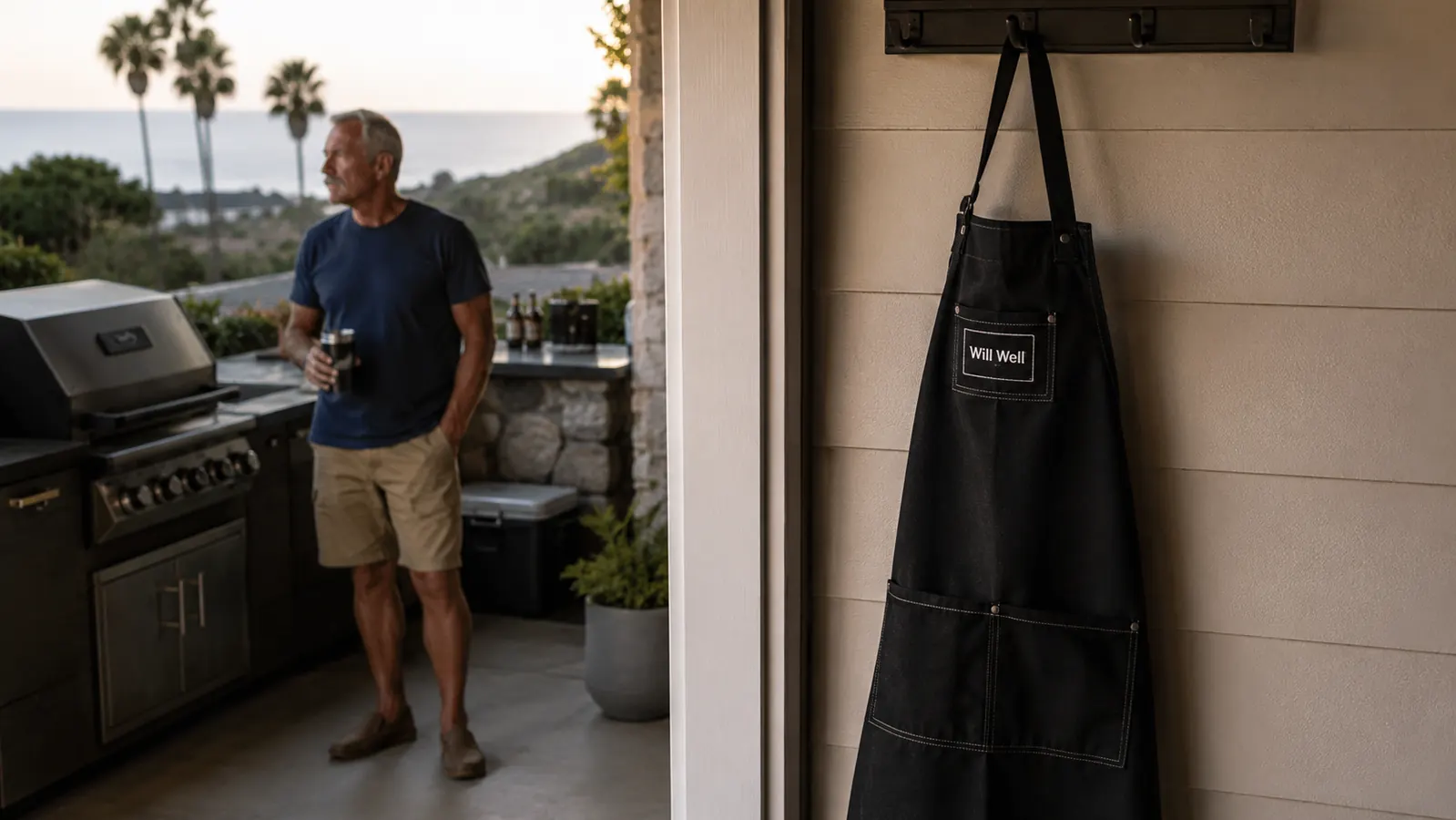
Storage matters just as much as washing. I keep mine on a hook just inside the garage door, right next to the path from the kitchen to the patio, so grabbing it is part of walking outside to start the grill, not a separate errand back into the house once the coals are already lit. If your apron lives in a drawer somewhere out of sight, you'll skip it half the time out of pure inconvenience, and the whole system falls apart before it ever gets a chance to prove itself.
I also let the apron hang fully open on the hook rather than folding it, which sounds like a tiny thing but it means the pockets stay square instead of creasing shut over a week of not being used. A folded pocket takes an extra second to pry open when your hands are already full of tongs and a hot lid, and an extra second is exactly the kind of delay this whole system is supposed to eliminate. Donna teases me for treating an apron hook like it's mounted gear on a rig, but she's also the one who reminds me where it is when I forget.
What Else Helps
A few smaller habits round this system out beyond the apron itself. I keep a small magnetic hook on the side of my grill cart specifically for the spatula and basting brush, tools that are too long and awkward to live comfortably in a pocket. I also try to load the Will Well apron the exact same way every single time, same pocket, same tool, rather than reorganizing depending on what I'm cooking that day. Consistency is what actually saves you the frustration, not any one clever pocket trick. And if more than one person in your house cooks on the grill, it helps to agree on the same layout as a household rule, the way Danny and Mark and I did, so nobody's hunting through someone else's system mid-cook.
It also helps to keep a spare thermometer battery and a couple of extra lighter flints in a small zip bag tucked in the bottom of one pocket, out of the way but there when you need it. I got caught with a dead thermometer battery halfway through a brisket two summers ago and had to guess doneness the old way, poking and hoping, which is not a method I'd recommend to anyone who's spent good money on meat. A minute of prevention beats twenty minutes of second-guessing a cut of meat you can't afford to overcook.
The apron doesn't do the cooking. It just makes sure you're never doing it one-handed while you hunt for your tongs.
Give Your Hands Somewhere to Put Things
A pocketed apron sounds like a small thing until you're the one standing at a hot grate patting yourself down for a thermometer. The Will Well chef apron is the exact setup this guide is built around, and it's still hanging by my garage door today.
Amazon Check Today's Price on Amazon →