
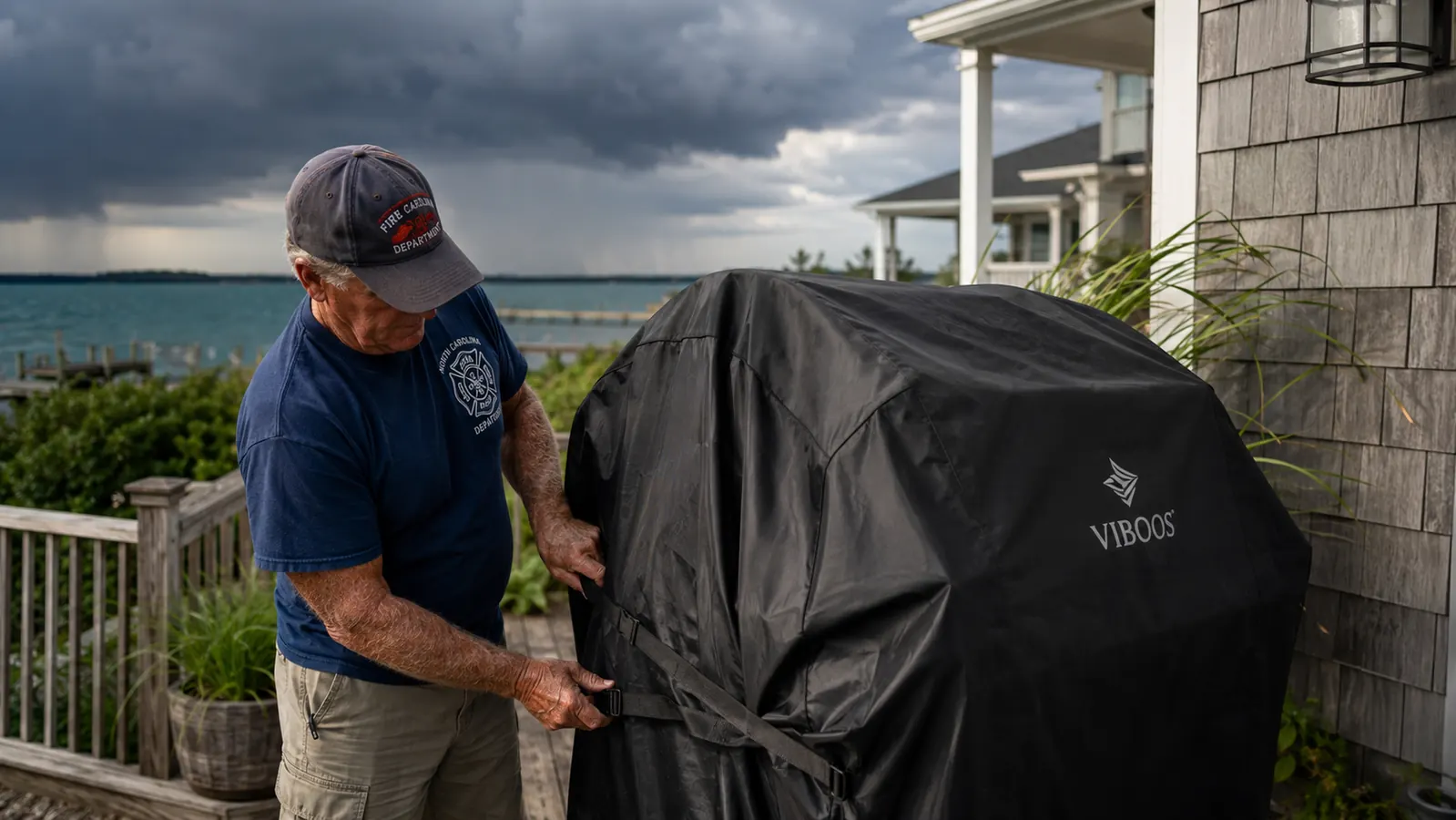
I bought my VIBOOS grill cover a little over a year ago, right after I watched a cheap vinyl cover I'd had for maybe eight months split clean down the seam during a September blow off the coast, flapping around my grill like a torn sail until Frank next door came over and helped me wrestle it off the fence where the wind had pinned it. That was the third cover I'd gone through in about four years living close enough to the water that salt air eats through everything faster than it has any business doing. I ordered the VIBOOS 58-inch cover that same week, mostly out of frustration, and it's been on my gas grill almost every night since, rain or shine, for over a year now.
This isn't a review from the first week out of the box. I've had the VIBOOS cover through a full coastal North Carolina year, two nor'easters, one tropical storm that clipped Wilmington close enough to knock our power out for a night, and the usual daily grind of salt-heavy air rolling in off the water and settling on anything left outside. Twenty-two years as a firefighter taught me to notice when gear starts failing before it actually fails, and I've kept a closer eye on this cover than most people probably would. Here's what I've learned about the VIBOOS grill cover after a year of actually using it, not just unboxing it.
The Quick Verdict
A year of salt air, storms, and daily use later, the VIBOOS cover still fits snug, still beads water, and has outlasted every cheaper cover I tried before it.
Amazon Check Today's Price →Tired of replacing a grill cover every storm season?
The VIBOOS 58-inch cover is built with rip-proof, fade-resistant material and a drawstring hem that actually holds against coastal wind, not just backyard breezes.
Amazon Check Today's Price on Amazon →How I've Used It
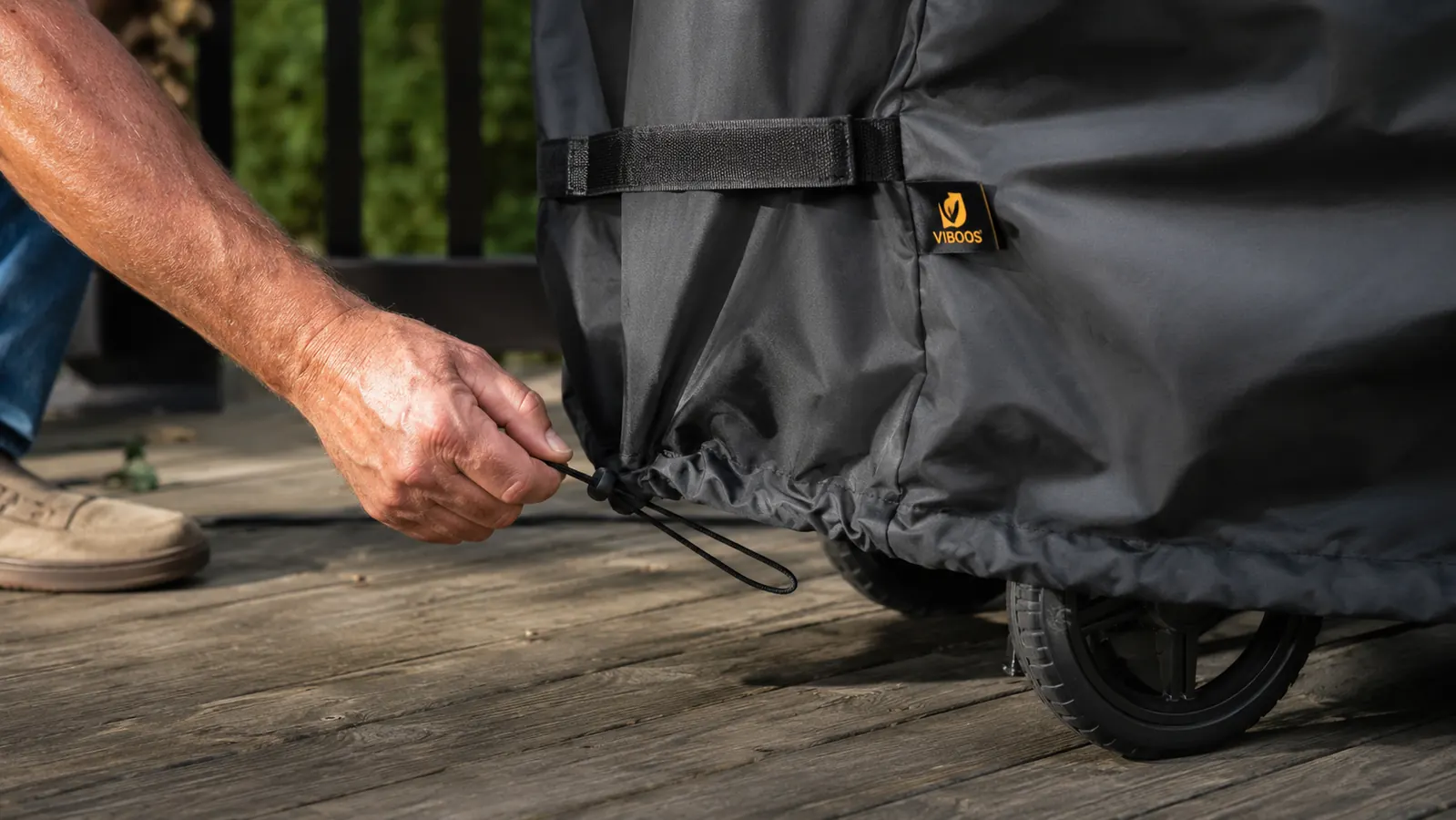
My grill sits on an open patio maybe forty feet from a tidal creek that feeds out toward the Intracoastal, which means it catches wind and salt spray most of the year, not just during storms. I cover it every single night after it cools down, no exceptions, a habit I picked up after watching my first grill rust through its burner tubes in under two years from sitting exposed. The VIBOOS cover goes on in about fifteen seconds once you get the rhythm down, draped over the hood, the hook-and-loop strap cinched around the middle to keep it from riding up in a gust, and the drawstring hem pulled snug around the base near the wheels.
Donna teases me about being more particular with the grill cover than I ever was with my own truck cover, but she's not wrong, and she's also the one who reminds me to check it before we head out for the weekend if there's rain in the forecast. My son Danny thought I was overdoing it the first time he watched me cinch the drawstring tight enough to leave a slight crease in the fabric, but he changed his tune after his own grill cover blew clean off during a windstorm at his place two towns over and he lost a weekend to hosing rust flakes off his grates.
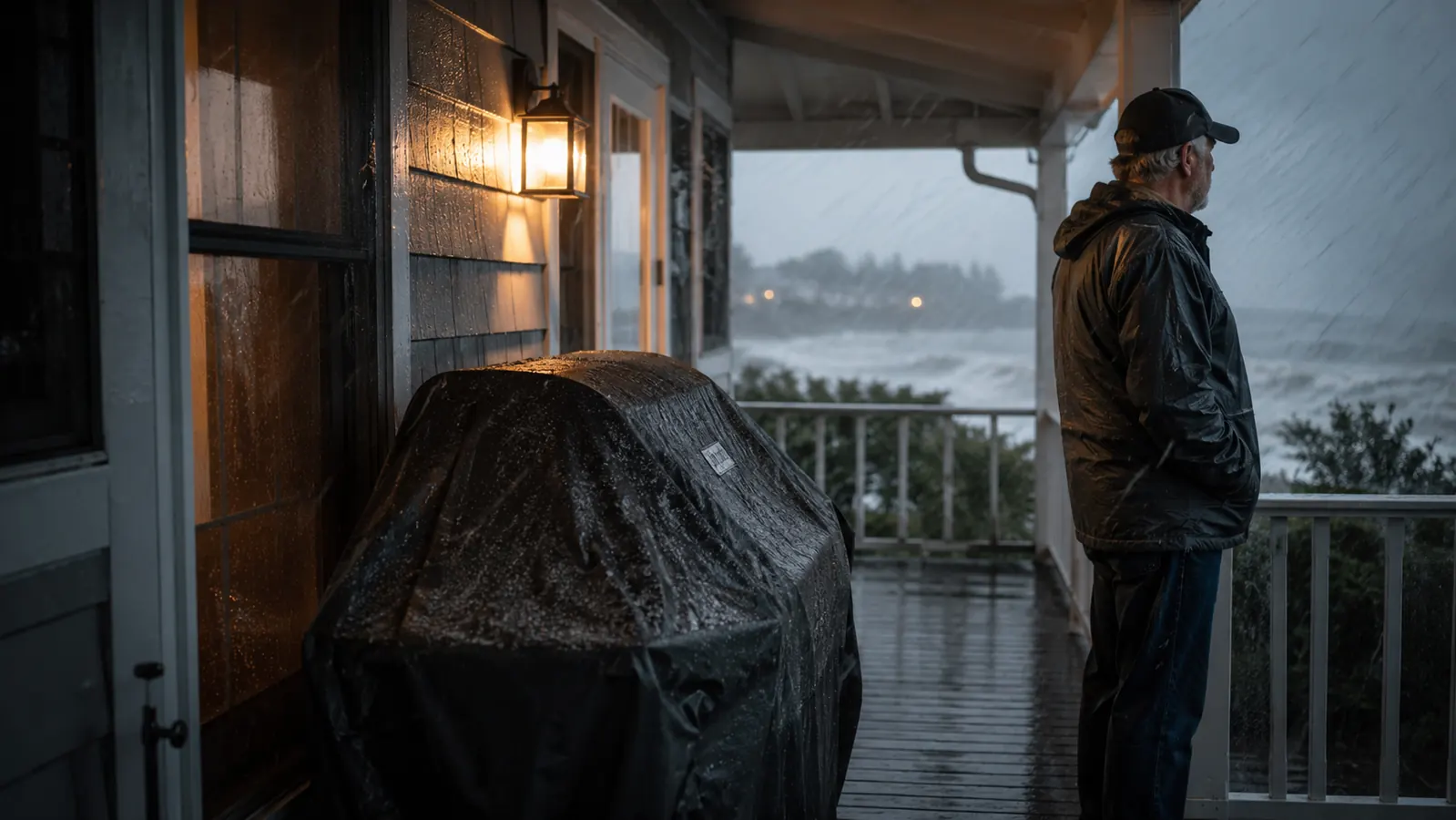
The real test came last hurricane season, when a storm tracked close enough to the coast that we lost power for about fourteen hours and had gusts strong enough to knock a patio chair into the yard. I didn't bring the grill inside, mostly because there wasn't room in the garage with everything else we'd hauled in, so I just made sure the VIBOOS cover was strapped down tight and hoped for the best. When the wind died down the next morning, the cover was still on, still cinched, with maybe an inch of shift at the hem where the wind had worked it loose. The grill underneath was bone dry. That's the moment I stopped thinking of this as just another cover and started trusting it.
Salt Air and What a Cover Actually Has to Survive Out Here
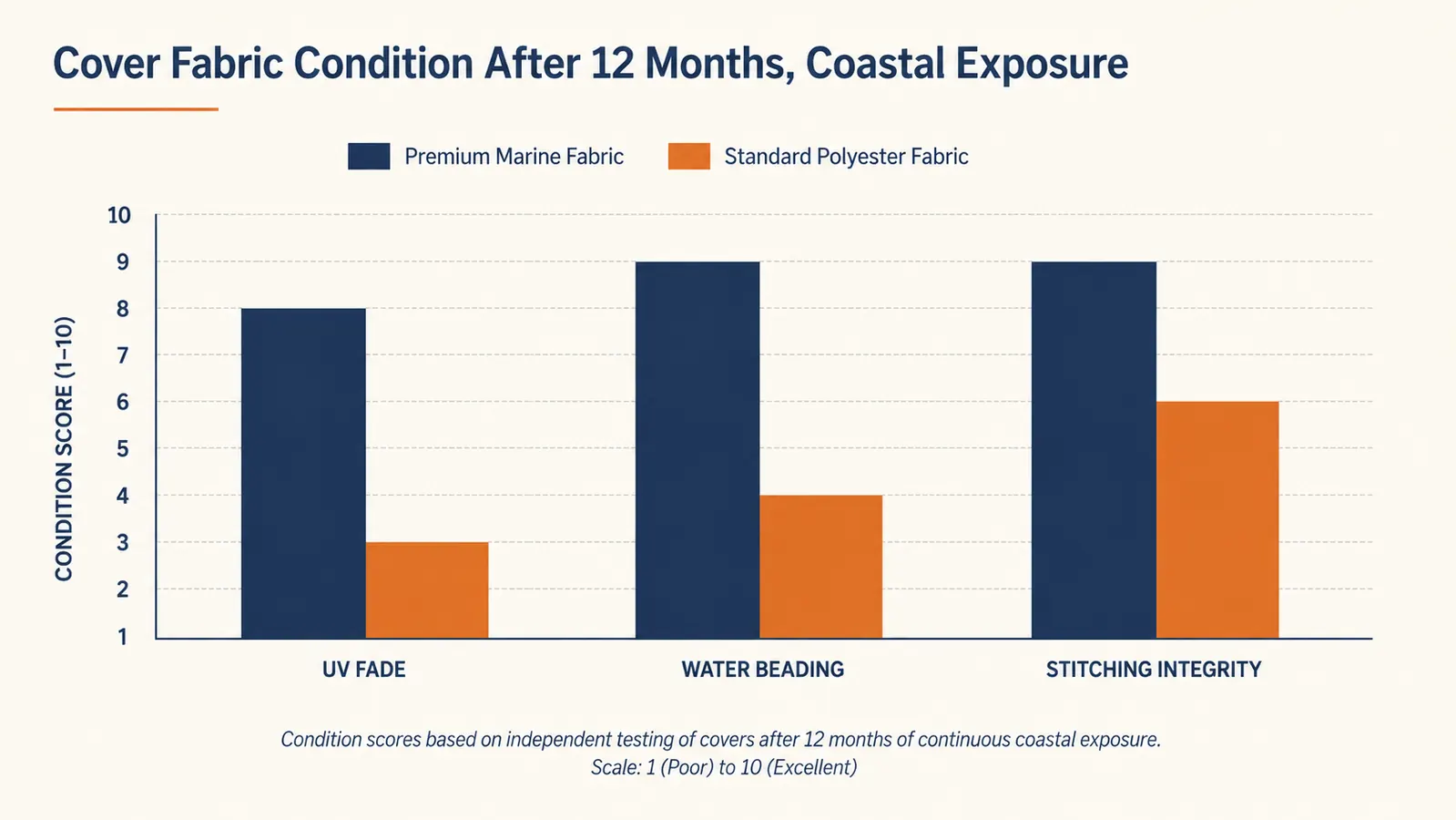
People who don't live near the water tend to think a grill cover's only job is keeping rain off. Out here, salt air is the bigger enemy, and it works slower and meaner than a single storm ever could. It settles into stitching, it corrodes zippers and metal grommets, and it breaks down cheap vinyl and polyester coatings from the inside out over a matter of months, not years. My old covers all failed the same way, a slow chalky fading followed by cracking along the fold lines, usually right where the material got stressed the most from wind.
The VIBOOS cover uses a heavier, tighter-woven fabric that's held its color and flexibility a lot better than anything I'd used before. I check it under a bright light every few months out of old habit, the same way I used to check turnout gear for wear, and I haven't found the chalky fading or brittle cracking that killed my last two covers. It still folds and bends without any stiffness, even after being balled up and stuffed in a bin during a couple of weeks I forgot to put it away properly during a busy stretch last spring.
Water beading is the other thing I watch closely, because once a cover stops beading water and starts absorbing it, you're basically trapping moisture against your grill instead of keeping it off. A year in, the VIBOOS material still sheds rain in beads rather than soaking it up, which matters a lot more here than it would somewhere with a dry climate. I've watched a hard rain roll right off it during an afternoon thunderstorm while Eli and Wyatt were over, and my grandsons thought it was funny how the water just slid off in sheets instead of soaking through.
The Straps, Hem, and Fit, One Year In
The hook-and-loop strap around the middle of the VIBOOS cover is the piece I worried about most going in, because that's usually the first thing to fail on a cheap cover. Mine still grabs solidly after a year of daily wrapping and unwrapping, no fraying at the edges and no loss of grip that I can feel. I run it snug enough that it presses a small dent into the cover fabric, and it holds through gusty afternoons that would have had my old vinyl cover flapping like a loose sail within minutes.
The adjustable drawstring hem at the bottom does most of the real work against wind, since that's the part that keeps the whole cover from ballooning up like a parachute the second a gust catches it from underneath. I cinch mine down around the wheel base every time, and it's the single biggest reason I trust this cover through a storm the way I don't trust most others. The drawstring toggle itself has held up fine, no cracking in the plastic, though I did have to re-thread it once after it worked loose during a particularly windy stretch back in the spring.
Fit-wise, the 58-inch size is close to right for my grill, a little roomy at the shoulders where the side burner sticks out, which honestly helps with airflow underneath so moisture doesn't get trapped against the metal on humid days. If your grill runs closer to the small end of that size range, expect a little extra fabric bunched at the corners, nothing that's caused a problem for me, just something worth knowing before you order.
I've also compared notes with Frank next door, who ended up buying the same VIBOOS cover for his kettle grill after watching mine survive that hurricane season storm. His grill is a completely different shape and size, closer to a round charcoal setup than my full-size gas grill, and he had to size down a version of the cover to match, but the fabric and strap system performed the same way for him. Cheap covers usually fail the same way regardless of what they're covering. It says something when the good ones hold up the same way across different grills too.
What Nearly Wrecked It, and What Didn't
Big Earl came by one Saturday and leaned his weight against the grill while it was covered, catching the edge of the VIBOOS cover on a rough spot on the patio railing as he steadied himself. It caught, but it didn't tear, just a small scuff mark on the fabric that I can barely find now even knowing exactly where to look. That was the moment I stopped babying it around the house. A cheaper cover I'd owned before that would have torn clean through on the same snag, based on how easily it ripped the one time my dog caught a claw in it.
The bigger test was a full season of direct coastal sun on the parts of the cover that get hit hardest, the top of the hood where there's no shade at all most of the day. UV breakdown is usually what kills a cover before rain or salt ever gets the chance, the fabric turning brittle and losing its color from the top down. A year in, the top of my VIBOOS cover has faded slightly compared to the sides that get more shade, but it hasn't gone brittle, and there's no cracking when I fold it. That's a meaningfully different result than what I got out of my last two covers, both of which were cracking at the seams inside of a year.
Other Covers I Tried Before This One
Before the VIBOOS cover, I went through a basic vinyl cover from a hardware store that split at the seam during that September storm I mentioned, and before that, a thin polyester cover that faded to a chalky gray within one summer and started shedding little flecks of coating every time I pulled it off. Neither one had a proper drawstring hem, just an elastic band that lost its stretch within a few months of coastal humidity, which meant both of them ended up loose enough to catch wind and flap constantly.
I also tried a heavier canvas-style cover for about a season, which held up fine against wind and rain but soaked through completely during a long rainy stretch and trapped moisture against the grill for days before I noticed. That's the tradeoff I was trying to avoid with the VIBOOS cover, something heavy enough to survive real weather without turning into a sponge. So far it's threaded that needle better than anything else I've owned.
There was also a stretch, embarrassing to admit now, when I skipped a cover altogether for about a month after my second one failed, figuring the grill was rugged enough to handle bare exposure until I got around to ordering a replacement. It wasn't. I found rust starting on the lid hinges and around the control knobs within that single month of salt air with nothing between the metal and the weather. That's really what convinced me to stop shopping on price alone and put real money, even if it's not a lot, into something like the VIBOOS cover that actually holds up out here.
What We Liked
- Rip-proof fabric held up against a snag that would have torn my old vinyl cover
- Water still beads and rolls off after a full year, no soak-through
- Drawstring hem and hook-and-loop strap kept it in place through a close hurricane brush
- Minimal UV fading on the sun-exposed top panel after a year of coastal exposure
- Fits with enough room for airflow, which helps prevent trapped moisture
Where It Falls Short
- Slightly loose fit at the shoulders on my particular grill, more fabric bunching than a snug cover
- Drawstring toggle needed re-threading once after working loose in high wind
- Top panel shows a bit more fading than the shaded sides after a full year of direct coastal sun
My old covers failed slow and quiet, a little more brittle every month, until one storm finally finished the job. This one's still doing the job it was bought for.
Who This Is For
If you live anywhere near salt air, or you just deal with real wind and rain more often than the occasional light shower, the VIBOOS cover is worth the small investment over a bargain-bin cover that'll need replacing by next season. It's a good fit for anyone who covers their grill every day rather than just tossing a cover on before winter, since the strap and drawstring system is built for regular use, not a once-a-year wrap and forget. At under fifteen dollars, it's also an easy way to protect a grill that cost you a whole lot more than that.
Who Should Skip It
If your grill sits under a covered porch or in a garage most of the time and only sees the occasional light rain, you probably don't need anything this heavy duty, and a cheaper basic cover would do the job fine. It's also worth double-checking the size chart against your specific grill's dimensions before ordering, since a cover that's noticeably too big or too small won't cinch down properly no matter how good the drawstring hem is.
Ready to stop replacing your grill cover every storm season?
Grab the VIBOOS 58-inch cover, cinch the drawstring hem tight, and let a year of coastal weather testing work in your favor before the next storm rolls in.
Amazon Check Today's Price on Amazon →