
Salt air doesn't announce itself the way a storm does. There's no siren for it, no radar blob to track on the evening news. It just sits in the atmosphere here on the North Carolina coast, day after day, working its way into hinges, burner tubes, and control knobs while you're not looking. I found that out the hard way with my first grill, which I left bare on the patio for a little under two years before the burner tubes rusted through from the inside. That grill should have lasted a decade. It didn't, because I never covered it, and I didn't understand yet that a grill cover isn't optional gear near the water, it's the difference between a grill that lasts and one that doesn't. Since then I've used a VIBOOS 58 inch grill cover on every grill I've owned, and this guide walks through exactly how I choose one, fit it, and actually use it so it does the job it's bought for.
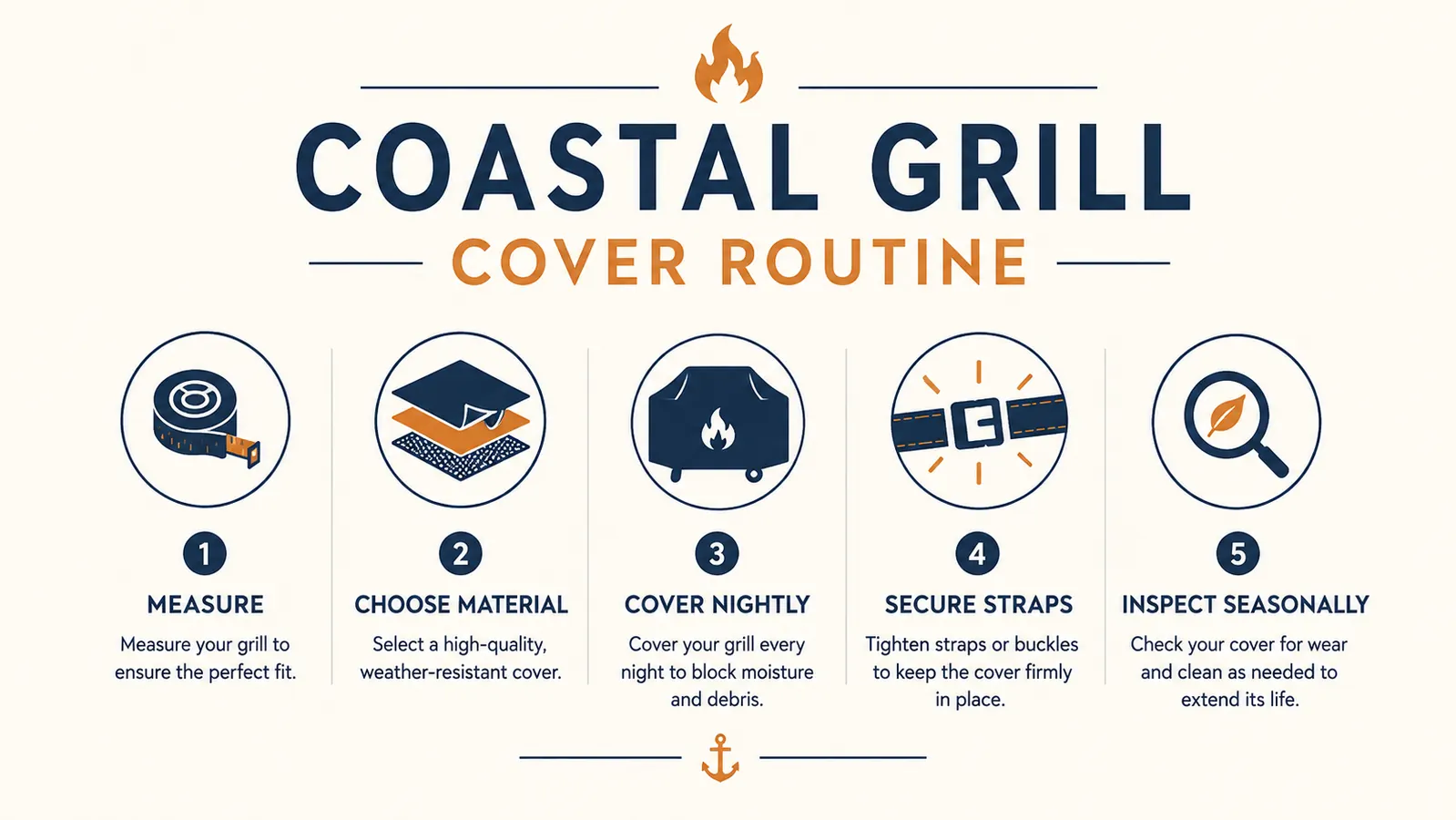
This isn't a review of one product. It's the process, step by step, the same one I've walked my son Danny and my neighbor Frank through after each of them lost a grill part to weather they thought they could ignore. Measuring your grill correctly, picking a fabric that's rated for what you're actually up against, building the habit of covering it every single night instead of just before a named storm, securing it so wind can't undo all that work, and checking it every season for wear before it fails on you. None of these steps take more than a few minutes. Skipping any one of them is how a two-hundred-dollar grill turns into a rust bucket in under two years, same as mine did.
Your Grill Is Losing the Fight With Salt Air Right Now
The VIBOOS 58 inch cover is built with waterproof, anti-UV, rip-proof fabric and a drawstring hem that actually holds against coastal wind. It's the cover I switched to after losing my first grill to rust in under two years.
Amazon Check Today's Price on Amazon →Step 1: Measure Your Grill Before You Buy Anything
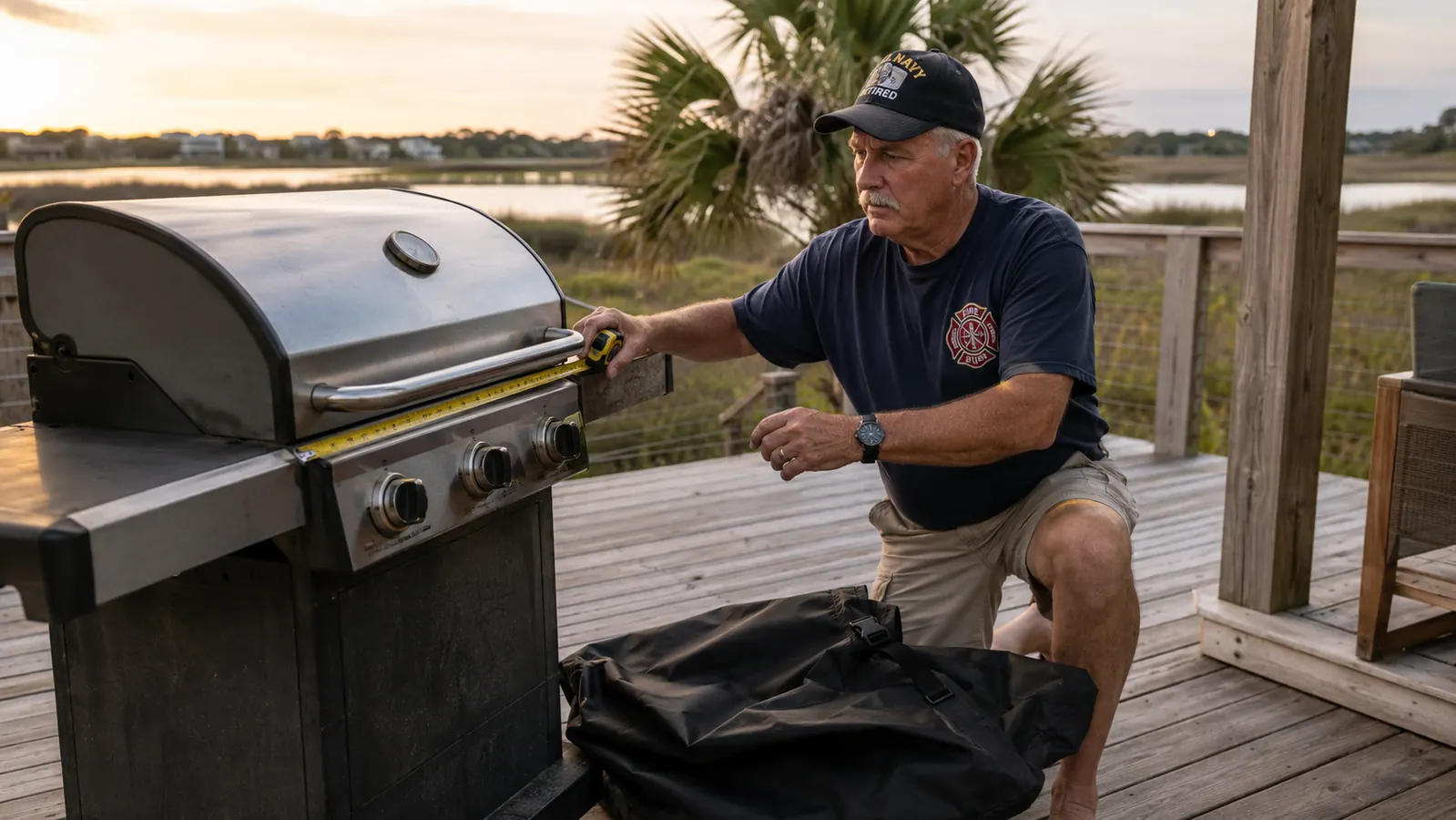
Most people skip this step entirely, and it's the one that decides whether a cover actually works or just sort of drapes there looking useless. Measure the width, depth, and height of your grill with the lid closed, including any side burners or shelves that stick out past the main body. Write those three numbers down before you shop, not after. A cover that's a couple inches too small will strain at the seams and pull loose from its straps within a season. One that's too big will billow like a parachute the first time real coastal wind gets under it, which is exactly the failure mode that used to send my old tarps sailing across the yard.
The VIBOOS cover comes in a 58 inch size that fits most full-size gas grills, but I still measured mine before ordering, because a little extra room at the shoulders where my side burner sticks out is fine, while a cover that's genuinely undersized isn't something you can fix with a strap, no matter how tight you cinch it. If your grill runs on the smaller side, expect some extra fabric bunched at the corners. That's not a defect, that's just math, and it's a lot better than a cover that won't reach around the base at all.
Check the fit against your grill's specific footprint, not just its general category. A 58 inch cover fits a lot of standard gas grills, but grills with an attached side table or a taller hood profile can run bigger than they look. I've had Frank text me a photo of his grill next to a tape measure before ordering his own cover, because he'd already been burned once buying a cover that turned out to be built for a kettle-style charcoal grill instead of his propane setup.
Step 2: Choose a Fabric Built for Salt Air, Not Just Rain
Most grill covers you'll find at a hardware store are rated for rain and general outdoor use, full stop. That's a lower bar than what a coastal patio actually demands. Salt air breaks down cheap vinyl and thin polyester coatings from the inside, a slow chalky fading followed by cracking along every fold line, usually right where the fabric flexes the most in wind. I went through two covers that failed exactly that way before I understood what I should have been shopping for from the start.
Look for three things specifically: waterproof fabric that beads water instead of soaking it up, an anti-UV coating that resists fading and won't turn brittle after months of direct sun, and rip-proof material that can take a scuff against a patio railing or a curious dog's claw without tearing clean through. The VIBOOS cover checks all three boxes, and it's the reason I stopped losing a cover every single season the way I used to. A cover that soaks up rain instead of shedding it is actually worse than no cover at all, because now you've got standing moisture trapped against bare metal for days instead of hours.
Don't assume thicker automatically means better, either. I tried a heavy canvas-style cover for one full season thinking more fabric would mean more protection. It held up fine against wind but soaked through completely during a long rainy stretch and trapped water against the grill for days before I noticed. What you actually want is a fabric that's engineered to resist water absorption, not just one that's dense enough to feel sturdy in your hands at the store.
Step 3: Cover the Grill Every Night, Not Just Before Storms
This is the habit that actually does the protecting, and it's the one most people get wrong. A grill cover only works when it's on the grill, which sounds obvious until you realize how many people only reach for theirs when a named storm shows up on the forecast. Salt air and sun don't wait for a hurricane watch. They're working every single day the grill sits uncovered, whether the sky is clear or not.
I cover my grill every night after it's cooled down, no exceptions, rain or shine. It takes about fifteen seconds once you get the rhythm down: drape the VIBOOS cover over the hood, cinch the middle strap, pull the hem snug at the base. My son Danny thought I was being overly particular about it the first time he watched me do it after a quick weeknight cookout, right up until his own uncovered grill started showing rust around the control knobs within a single month of leaving it exposed while he was between covers. That's really all it takes out here. One month, sometimes less.
Build it into whatever routine already ends your cookout. I close the propane valve, scrape the grates while they're still warm, and cover the grill in that order, every time, before I ever head back inside. Once it's attached to something you already do automatically, you stop having to remember it as a separate chore.
Step 4: Secure It Against Wind With the Straps and Hem, Not Just Gravity
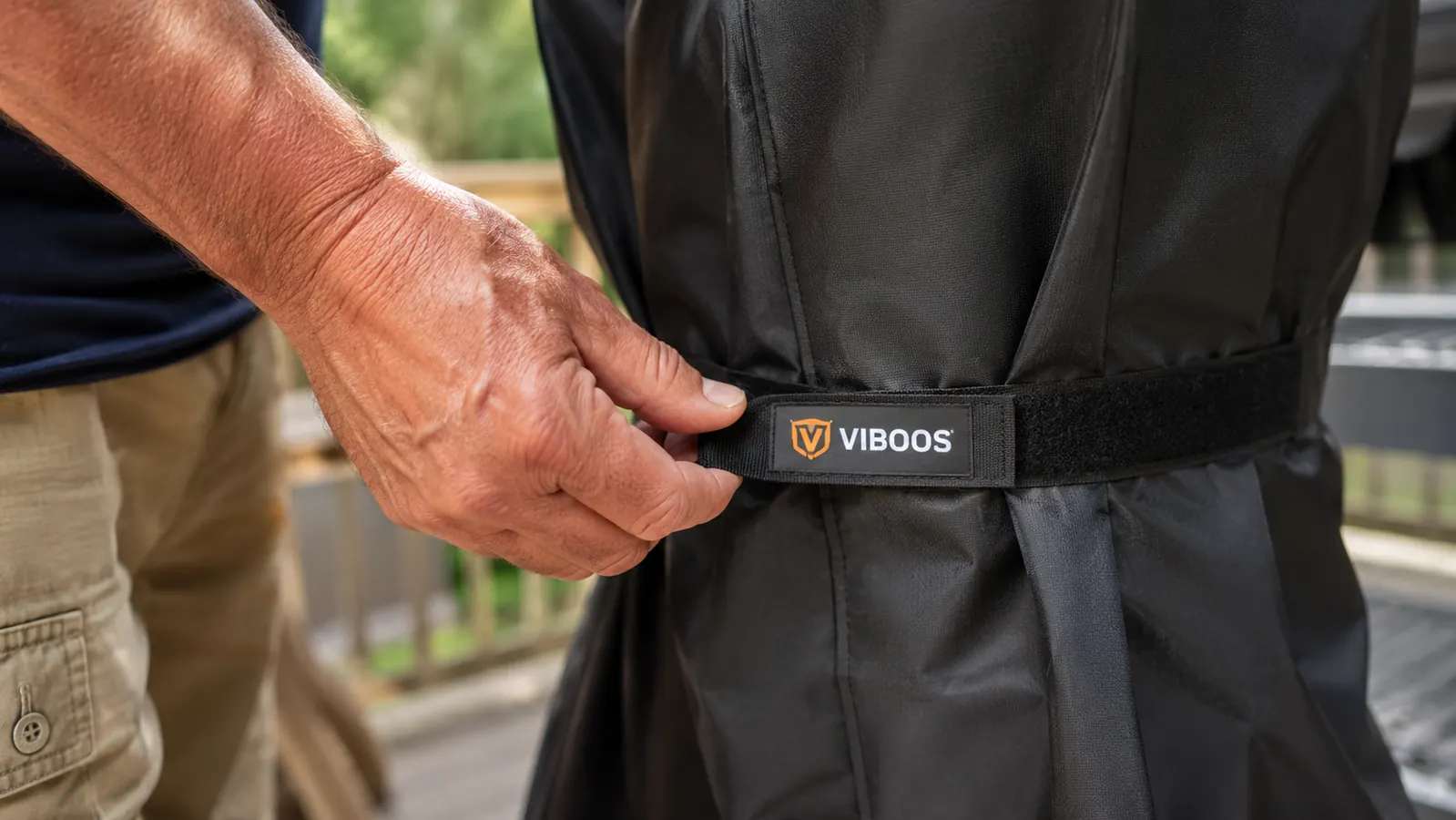
A cover that isn't actually secured is just a very expensive way to lose a cover during the next gust. Coastal wind doesn't care how good your fabric is if the cover itself isn't cinched down. The VIBOOS cover uses a hook-and-loop strap around the middle plus an adjustable drawstring hem at the bottom, and both of those matter more than people expect the first time they use one.
Wrap the hook-and-loop strap snug enough that it presses a slight dent into the fabric, not just resting loosely around the body. Then pull the drawstring hem tight around the base near the wheels and cinch the toggle. That bottom seal is what stops wind from getting underneath the cover and ballooning it up like a sail, which is the exact way a loose cover ends up wrapped around a fence three yards away. Frank found that out with a cheap cover during a spring squall, and it was a genuinely wasted purchase, since the cover wasn't even on the grill when the weather actually turned.
Check both fasteners every time you cover the grill, not just the first week you own it. Hook-and-loop straps lose a little grip over months of daily use, and a drawstring toggle can work itself loose during a genuinely windy stretch. I had to re-thread mine once after a rough week of coastal gusts, which took about thirty seconds and is a lot cheaper than replacing a rusted control panel.
Step 5: Build a Seasonal Inspection Into Your Routine
Even a good cover needs a checkup now and then. Every few months, pull the VIBOOS cover off in good light and look it over the way I used to check turnout gear back on the job, methodically, not just a glance. Feel for stiffness or brittleness in the fabric, especially along fold lines and on the top panel that takes the most direct sun. Check the stitching at the seams and the hook-and-loop strap for fraying. None of this takes more than five minutes, and it catches small problems while they're still small.
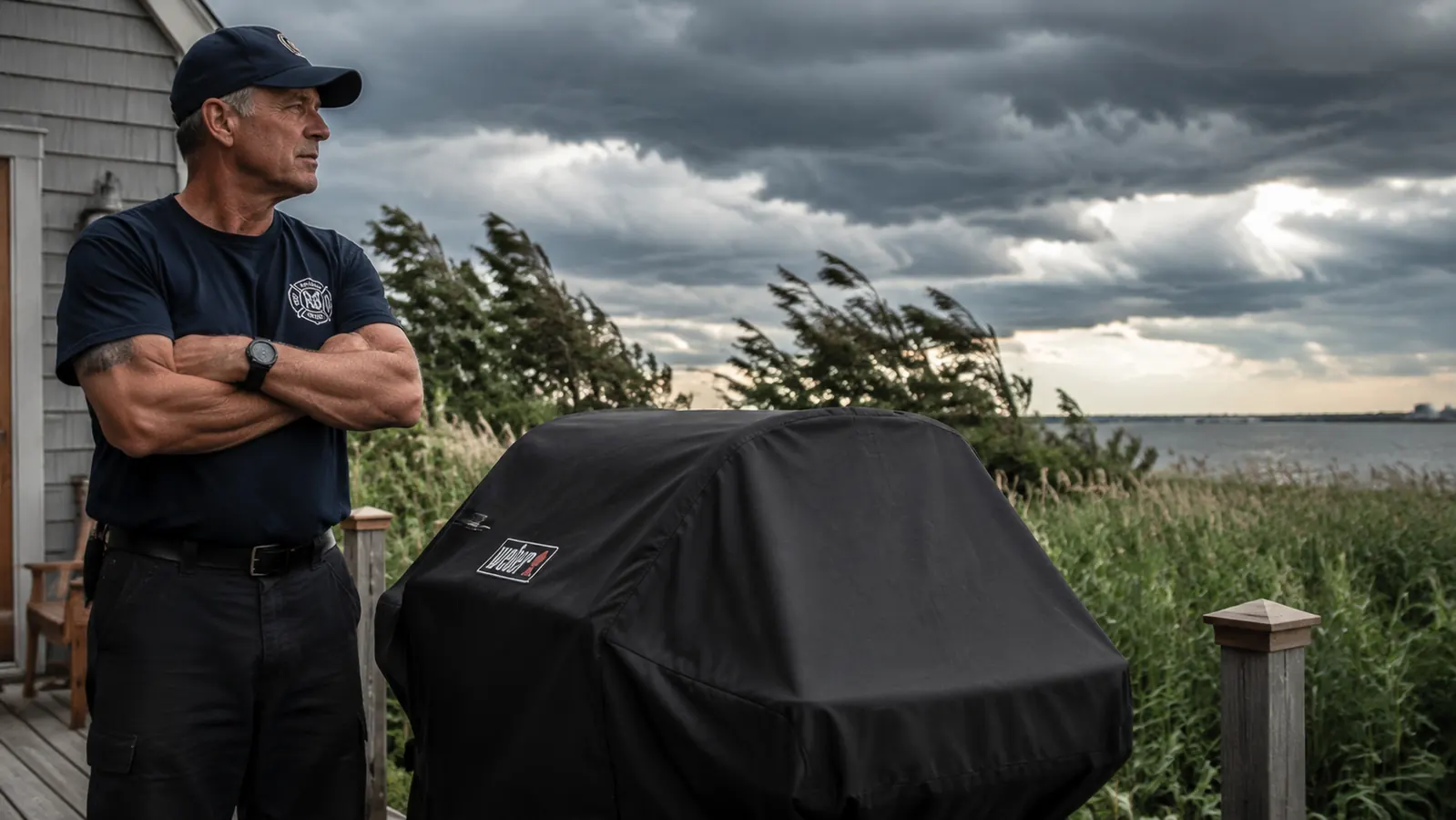
Pay closer attention heading into storm season. Before a tropical system tracks anywhere near the coast, my son-in-law Mark and I run through the same walk-through we use for the patio furniture, and the grill cover is part of that same checklist now. Straps cinched, hem pulled tight, nothing loose that a gust could grab. It takes less time than deciding what to do with the porch cushions.
Wash the cover occasionally too. Salt residue builds up on the fabric surface over time even when the material itself is holding up fine, and a light rinse with a hose and mild soap, air-dried before you put it back on, keeps it from grinding into the coating the way accumulated grit can. I do this maybe twice a season, more if we've had a stretch of dry salty wind off the water without much rain to naturally rinse things off.
What Else Helps
A cover handles the outside of the grill, but a few other habits round out the picture. Keep the grill on as level and stable a spot as you can, since a cover that's constantly shifting because the grill rocks on uneven pavers won't cinch as tight as it should. I also keep the propane tank disconnected and stored separately rather than leaving it hooked up under a covered grill full time, mostly an old habit from the fire service that costs me nothing extra and removes one more variable.
If your grill has a side burner or an attached shelf that the main cover doesn't fully reach, check whether a full-coverage size is available before settling for a cover that leaves those parts exposed. Big Earl learned that one after buying an undersized cover for his smoker and finding rust starting on an exposed side shelf within a season, even though the main body stayed protected the whole time. The fix isn't a better routine, it's just the right size cover in the first place.
And don't skip the drawstring hem even on nights when the forecast looks calm. Coastal weather changes faster than a forecast updates, and the whole point of building this into a nightly habit is that you're not out there re-deciding whether tonight's the night it matters. It always matters. That's really the entire lesson behind this guide, boiled down to one sentence.
A grill cover only protects the grill on the nights you actually use it. The habit is the product. The VIBOOS cover just makes the habit easy enough to keep.
Don't Let Your Grill Rust Out the Way My First One Did
Measure your grill, pick a fabric built for salt air, and cover it every single night. The VIBOOS 58 inch cover makes every step in this guide about fifteen seconds of effort.
Amazon Check Today's Price on Amazon →