
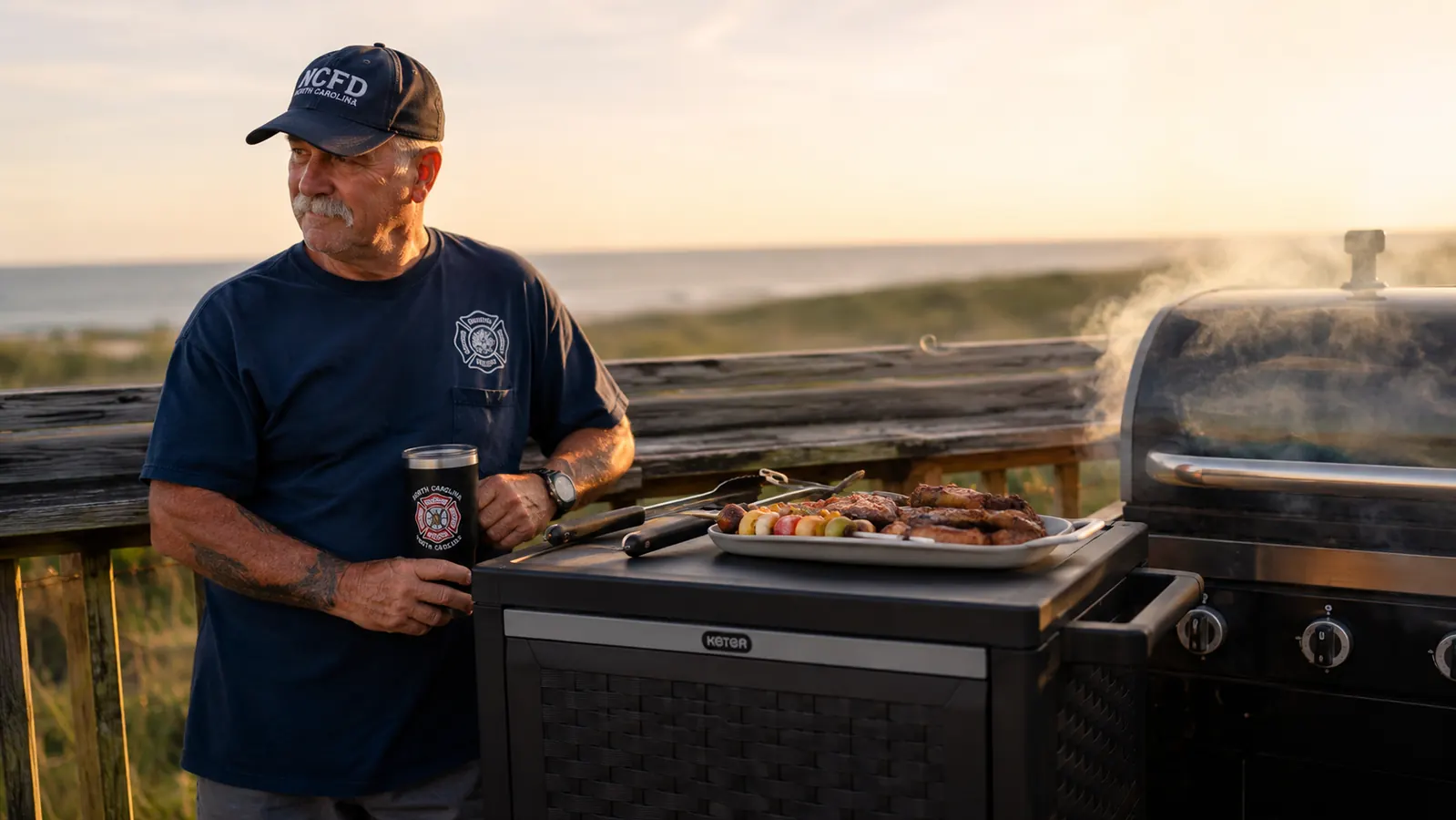
I spent twenty-two years running into buildings other people were running out of, and if there's one thing that job teaches you, it's that a bad setup costs you steps you don't have time for. So when I tell you my old grilling setup, a wobbly card table dragged out from the garage every Saturday, was driving me half crazy by the third cookout of last spring, understand that I mean it the way a firefighter means it. Too many trips back into the kitchen for tongs, a bowl, a fresh roll of foil, while burgers sat on the grate longer than I wanted. My wife Donna finally said something after I left a full rack of ribs to fend for itself mid-June while I hunted down a serving platter, and that's when my son-in-law Mark decided I'd suffered enough and turned up with the Keter outdoor rolling prep cart.
I'm Curtis Boone, retired from the Wilmington-area fire service, and I've been running the grill for family gatherings since before my son Danny and my son-in-law Mark were old enough to man the tongs themselves. This isn't a review written after one weekend with a new toy. The Keter cart has sat next to my grill from April through the tail end of cookout season, through Memorial Day, through my grandsons Eli and Wyatt's visits, through a hurricane scare that had it strapped down in the shed for four days straight. Here's what I found out.
The Quick Verdict
A sturdy, genuinely useful rolling prep station that solved my back-and-forth kitchen problem for good and shrugged off a full season of coastal weather without a complaint.
Amazon Check Today's Price →Stop treating your kitchen counter like a satellite grill station.
If you're making three or four trips back inside every cookout for tools, bowls, and condiments, a rolling cart parked right at the grill fixes that on day one, not eventually.
Amazon Check Today's Price on Amazon →How I've Used It
The Keter cart went into service the same week it arrived, parked in the spot between my grill and the back door where the card table used to live. From April through late October, weather and hurricane season allowing, I cook outside most weekends, sometimes twice, and the cart has been part of every single one of those cookouts. I use the top surface for the obvious stuff, resting platters, cutting boards, a bottle of my go-to rub, but the real value showed up in the enclosed cabinet underneath.
That cabinet holds a stack of mixing bowls, a roll of foil, extra tongs, and a bag of charcoal for the days I fire up the kettle instead of the propane. Before the Keter cart, all of that lived scattered between a kitchen drawer and a garage shelf, which meant every cookout started with me hunting for something I knew I owned but couldn't locate fast. Now it's a ten-second reach instead of a two-minute search, and that matters more than it sounds like when you've got hungry grandkids circling and a chicken thigh that needs flipping.
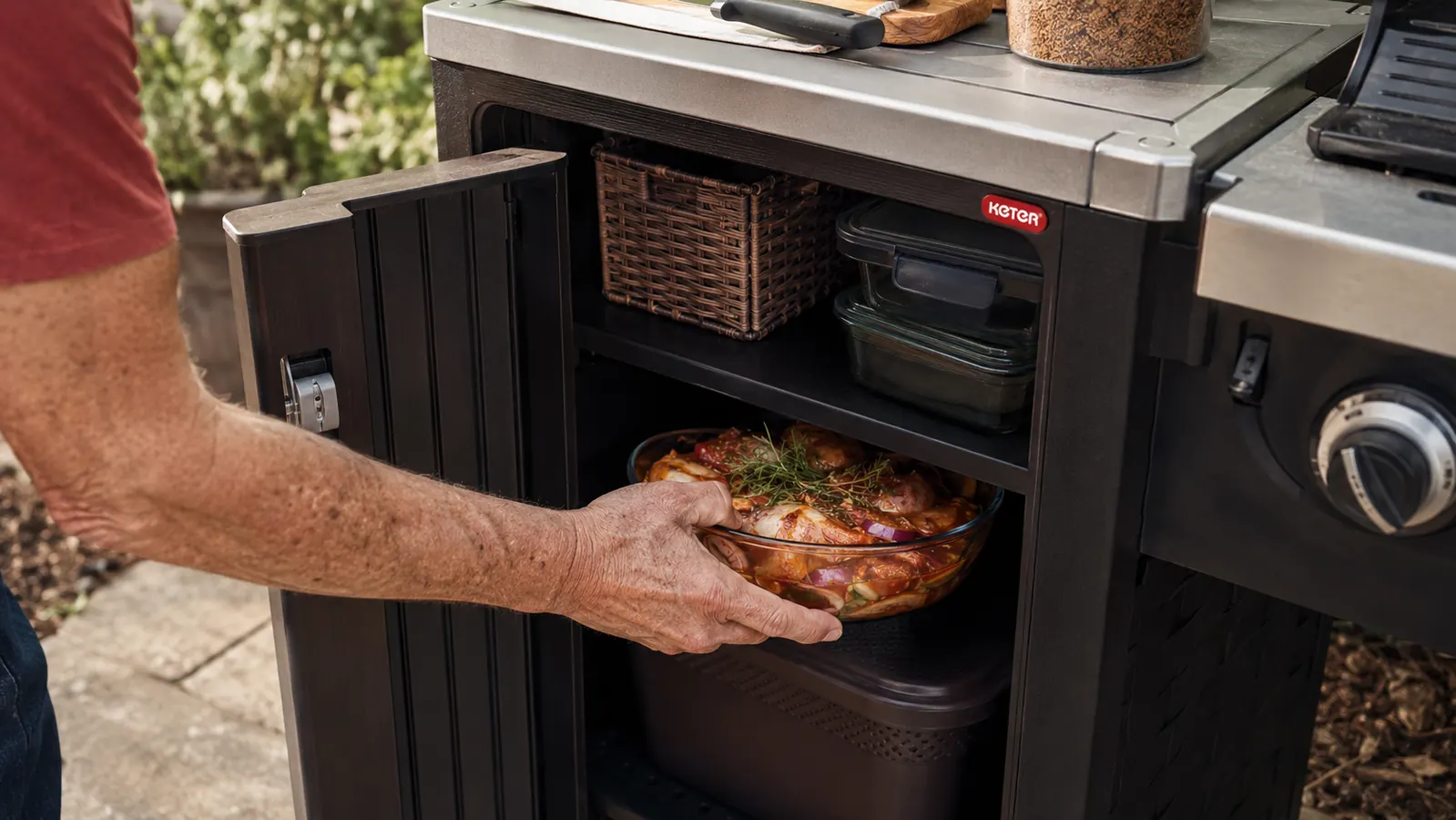
The Build, the Wheels, and What Keter Got Right
The cart is made from a resin material, not solid wood or metal, and I'll admit I went in a little skeptical about that. Twenty-two years of fire service teaches you to trust steel and distrust plastic. But this isn't the flimsy patio furniture resin I was picturing. It's a dense, textured finish in dark brown that actually looks decent next to a grill instead of looking like a leftover storage bin, and it hasn't chalked, faded, or gotten brittle sitting outside through a full season of coastal sun.
The four wheels are the feature I use every single cookout without thinking about it. Two of them lock, which matters more than I expected. I roll the Keter cart into position next to the grill, lock the front wheels, and it doesn't budge even when my grandson Eli leans on it to watch the burgers. When the cookout's over, I unlock it and roll the whole thing back toward the shed in one trip instead of carrying dishes and tools separately like I used to with the card table.
The top surface is a good size, big enough for a full sheet pan of raw chicken on one side and a cutting board with vegetables on the other, without everything crowding together the way it did on my old table. There's also a small side hook area where I've taken to hanging a towel and a pair of tongs, which sounds minor until you're not patting your pockets looking for a towel with greasy hands.
A Full Season Through Coastal Weather
The real test wasn't the first weekend, it was the accumulation. This cart sat outside through a humid coastal summer, through afternoon thunderstorms that rolled in fast the way they do here, and through one named storm that had me and Donna hauling patio furniture into the shed with about six hours notice. The Keter cart came through all of it without warping, without the wheels seizing up from rust, and without the cabinet door swelling shut the way a wooden cabinet might after that much moisture exposure.
I did leave it out uncovered more nights than I probably should have, which is on me, not the cart. A couple of the metal wheel axles picked up a light surface rust after a particularly wet stretch in July, and a little oil on a rag took care of it in about five minutes. That's the only maintenance the thing has asked for in a full season of near-daily outdoor exposure, which is better than I expected going in.
My friend Big Earl, a retired fire captain who cooks nearly as much as I do, came over for a cookout in August and gave the Keter cart the same once-over he gives any piece of gear before he trusts it. He checked the hinges, rocked it side to side to test the wobble, and admitted it was sturdier than he expected from something that light. Big Earl doesn't hand out compliments on gear easily, so that stuck with me.
Keeping the Whole Cookout Moving
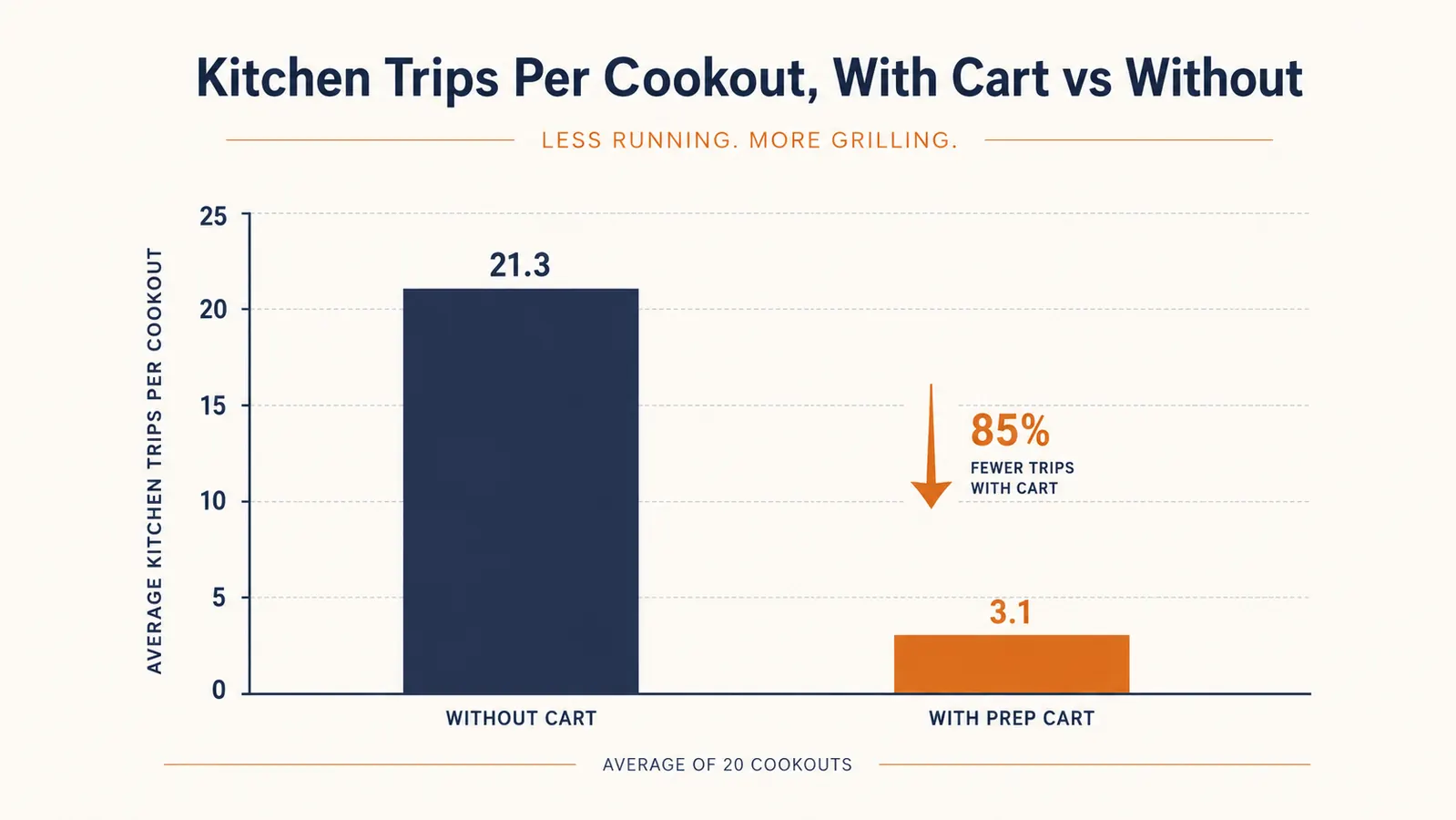
By midsummer, the pattern was obvious. Cookouts moved faster and I moved less. The number of times I used to walk back inside during a single cookout for something I forgot dropped from four or five trips down to maybe one. Everything I actually need lives on or in the Keter cart now, positioned exactly where I'm standing anyway.
It's also become the staging area for finished food. Instead of a platter sitting on the grill's little side shelf, which never held more than a rack of ribs anyway, I set finished chicken or burgers on the cart top to rest for a few minutes before they go inside. That extra surface space has quietly become one of the most-used features, more than I expected when I ordered it mainly for the storage.
My neighbor Frank noticed it over the fence one Saturday and asked where I got it, which is about as close to a five-star review as a guy gets from Frank. He's since ordered his own, and we've compared notes on the wheel-locking feature more than either of us probably should admit for grown men talking about a rolling cart.
Cleaning and the Small Stuff That Adds Up
Cleanup is where the resin construction actually pays off compared to the wood cart I almost bought instead. A wet rag wipes down marinade spills and grease splatter without staining the surface, which I can't say for a wooden prep table Donna's sister has that's picked up permanent dark rings from two seasons of use. I hose the whole Keter cart down maybe once a month during peak season, and it dries fast because nothing about it absorbs water the way wood does.
The cabinet door has a simple latch, not a lock, so it's not going to keep out a determined raccoon if you're storing food overnight, which I don't recommend anyway. But for keeping bowls and tools dust-free and out of the rain between uses, it's done exactly what I needed.
Tradeoffs I Ran Into
Nothing's perfect, and I'd rather tell you where this cart falls short than pretend otherwise. Assembly took me longer than the box suggested, closer to forty-five minutes than the quoted twenty, mostly because a couple of the panel screws wanted to strip if I didn't line them up exactly right. Take your time with that step and you'll be fine, but don't expect a five-minute setup.
The resin material, while durable, does flex a little more than I'd like if you lean hard on one corner. It's not going to collapse, I've had a full stockpot on it during a low-country boil without issue, but it doesn't have the rock-solid feel of a steel-framed cart. If you're the type who wants to set a heavy smoker or a full turkey fryer setup on it, I'd think twice. This is built for prep and staging, not for heavy equipment.
And as I mentioned, the light surface rust on the wheel axles after heavy rain exposure is a minor annoyance that a cover or more consistent storage habits would prevent entirely. Today's price on this cart is a reasonable one for what you get, but it's a bigger investment than a folding table, so it's worth checking current pricing and deciding if the extra storage and mobility earns its keep for how often you actually cook outside.
What I Considered Instead
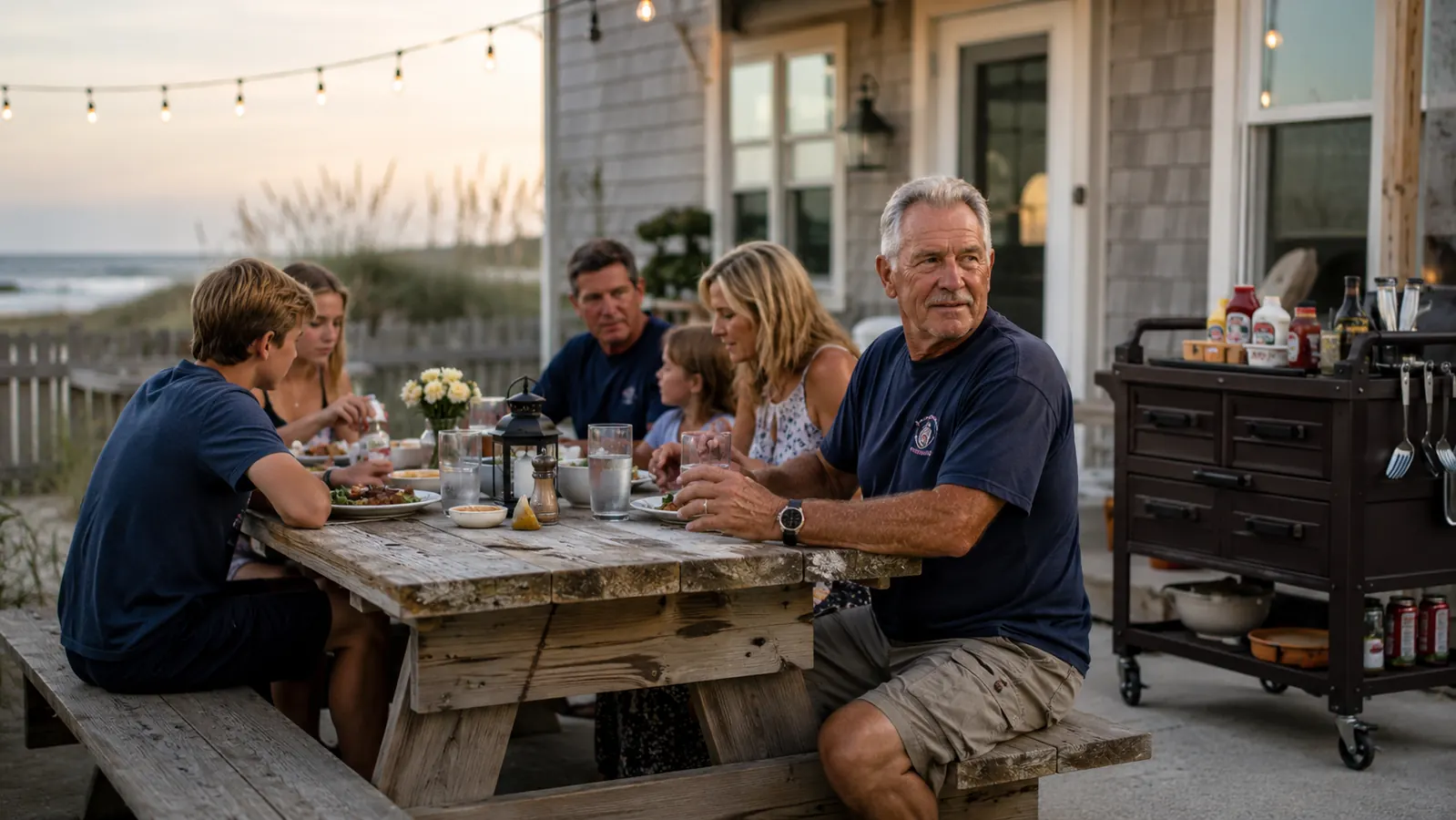
Before I landed on the Keter cart, I looked hard at a couple of alternatives. A basic folding table was my starting point, since that's what I'd used for years and it costs next to nothing. It works fine if all you need is flat surface space, but there's no storage, no wheels, and no weather resistance, and I go into more detail on that comparison over on our folding table breakdown if you want the full side-by-side.
I also considered a solid wood prep cart, the kind with a butcher block top that looks great in photos. Donna liked the look of those too, honestly. But wood outside in coastal humidity needs regular oiling and sealing to avoid warping and mildew, and I didn't want another maintenance chore added to my Saturday routine. The resin construction on the Keter cart trades a little bit of that classic look for a lot less upkeep, and after a season of hurricane-adjacent weather, I'm glad I made that trade.
A stainless steel prep table came up too, mostly because I like steel from my firehouse days. Those hold up well but run considerably heavier and pricier, and most of the ones I found didn't have enclosed storage, just an open shelf that would've left my bowls and tools exposed to rain. For what I actually needed, a dedicated station with covered storage and wheels, the Keter cart hit the balance better than either alternative.
What We Liked
- Locking wheels keep it steady at the grill, roll it away in one trip when you're done
- Enclosed cabinet keeps bowls, foil, and tools dry and within reach instead of scattered around the kitchen
- Resin finish held up through a full coastal season, heat, humidity, and one hurricane scare, without warping or fading
- Wipes clean fast, no staining from marinades or grease the way a wood surface would
- Cut my mid-cookout kitchen trips from four or five down to about one
Where It Falls Short
- Assembly runs closer to forty-five minutes than the box suggests, screws can strip if rushed
- Flexes a bit under heavy weight on one corner, not built for a full smoker or turkey fryer
- Wheel axles picked up light surface rust after heavy rain exposure without a cover
- Costs more upfront than a basic folding table
Twenty-two years of watching cheap gear fail under real conditions taught me to check the hinges before I check the price. This one's still holding a season later.
Who This Is For
If you host regular cookouts and you're tired of running back into the kitchen mid-grill for tools you forgot, the Keter rolling prep cart solves that problem directly. It's also a smart pick for anyone dealing with a small patio setup who needs storage and prep surface without permanently mounting anything. Families with grandkids underfoot, like mine, will appreciate having a dedicated spot for tongs and towels that isn't the kitchen counter.
Who Should Skip It
If you grill occasionally, once or twice a summer, a cart like this is probably more than you need, and a folding table will do the job fine. Anyone planning to set heavy equipment, a full smoker or a large stockpot rig, directly on the cart surface should look at a steel-framed alternative instead. And if you're not willing to occasionally wipe down or cover the wheels, the light rust issue I ran into will likely show up for you too.
A season later, I'm still not walking back inside mid-cookout.
That's the exact problem this cart was bought to solve, and it solved it the first weekend. Check today's price and current availability before your next backyard gathering.
Amazon Check Today's Price on Amazon →