
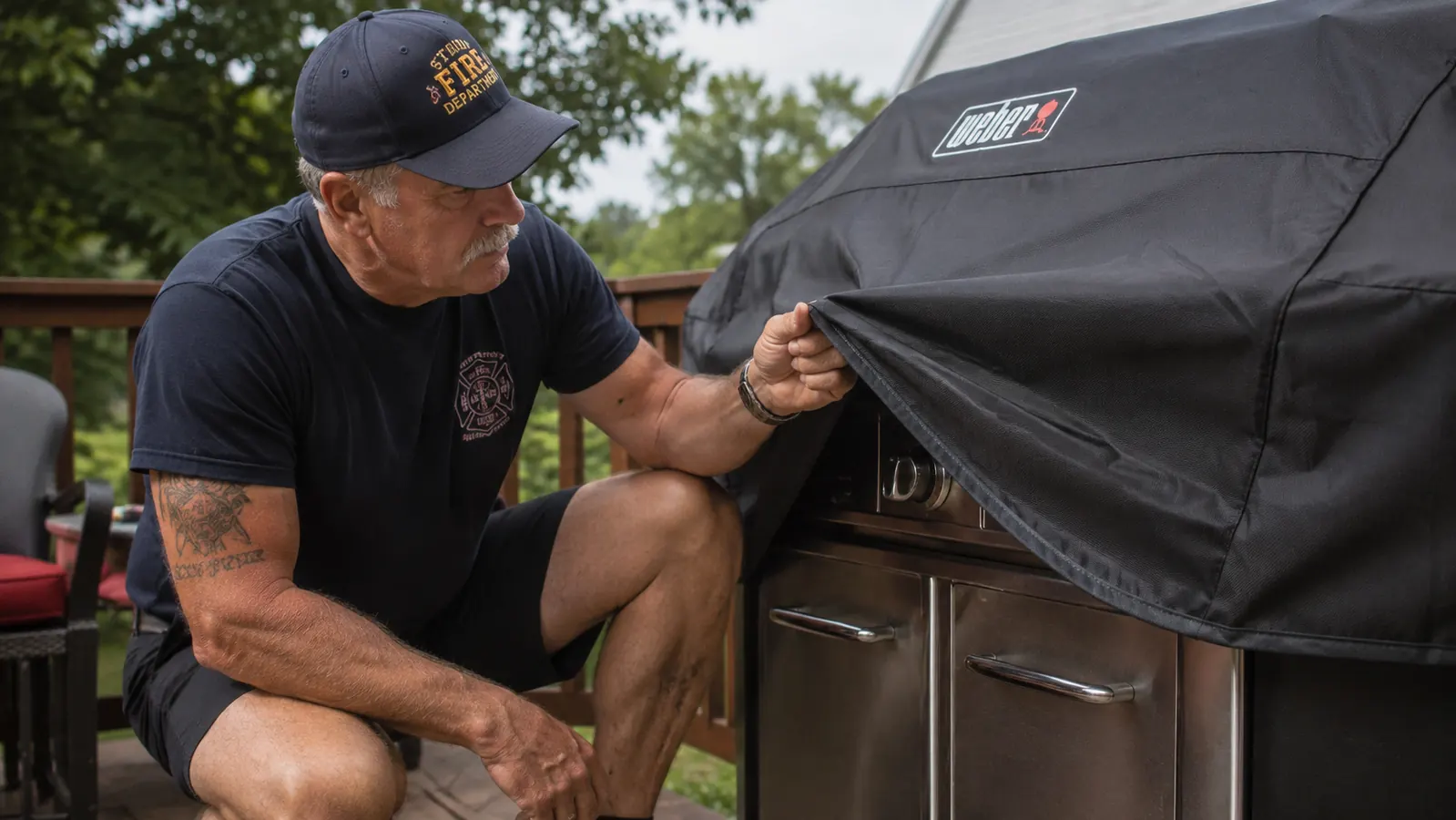
I'll be honest with you before we get any further into this. When my VIBOOS grill cover showed up on my porch a little over a year ago, my first reaction wasn't excitement, it was suspicion. Fourteen dollars and change for a grill cover that claims to be rip-proof, waterproof, and fade-resistant sounds exactly like the kind of promise I'd heard on the last two covers I bought and eventually threw in the trash. Twenty-two years reading gear that lies to you about what it can handle taught me that a cheap price tag on protective equipment usually means a short life. So I bought one anyway, mostly to prove myself right, and I kept close notes on everything that went wrong along the way.
This isn't the review where I tell you the VIBOOS cover is perfect, because it isn't. If you've poked around this site already, you may have run into a longer piece I wrote about a full year of coastal weather with this same cover, storms, salt air, the works. That one covers the big-picture durability question. This one's different. This is the stuff that doesn't make it into a five-star headline, the fold creases it ships with, the condensation I found underneath on muggy mornings, the smell it picked up the one time I put it away wet, and the way the generous fit behaved on a grill shaped nothing like mine. If you're about to spend your money here, you deserve the parts most reviews skip.
The Quick Verdict
A solid, honest value for the price, but it has real quirks around moisture and fit that nobody mentions until you've lived with it a while.
Amazon Check Today's Price →Want the real story before you buy, not the highlight reel?
The VIBOOS 58-inch cover holds up where it counts, but it has habits worth knowing about first. Check today's price and read on for the full picture.
Amazon Check Today's Price on Amazon →How I Actually Tested This One
I didn't just strap this cover on and call it done. I ran it through a full spring pollen season here near Wilmington, which is its own kind of test most reviewers never mention. Late March into April, the pine and oak pollen gets so thick it coats everything outside in a yellow-green film, cars, porch rails, and yes, grill covers, in a matter of days. I wanted to see whether that fine dust would work its way into the fabric weave and stain it, or whether it would rinse off clean the way a tightly woven material should.
I also went looking for the cover's weak points on purpose instead of just waiting for them to show up. I deliberately left it folded away slightly damp one time after a fast-moving storm to see what would happen, something I'd never normally do but figured somebody ought to test before you find out the hard way. And I handed it off to my son-in-law Mark for a few weeks so he could try it on his portable tailgate grill, a completely different shape and size than my full-size gas unit, to see how the fit held up on something it wasn't really sized for.
For two straight weeks during the muggiest stretch of summer, I lifted the cover first thing every morning before coffee and checked the underside of the hood for moisture, the same instinct that had me checking hose couplings for slow leaks back on the job. None of that shows up in a quick five-star write-up, but it's the kind of testing that tells you what a product actually does once the newness wears off.
The Fold Creases Nobody Warns You About
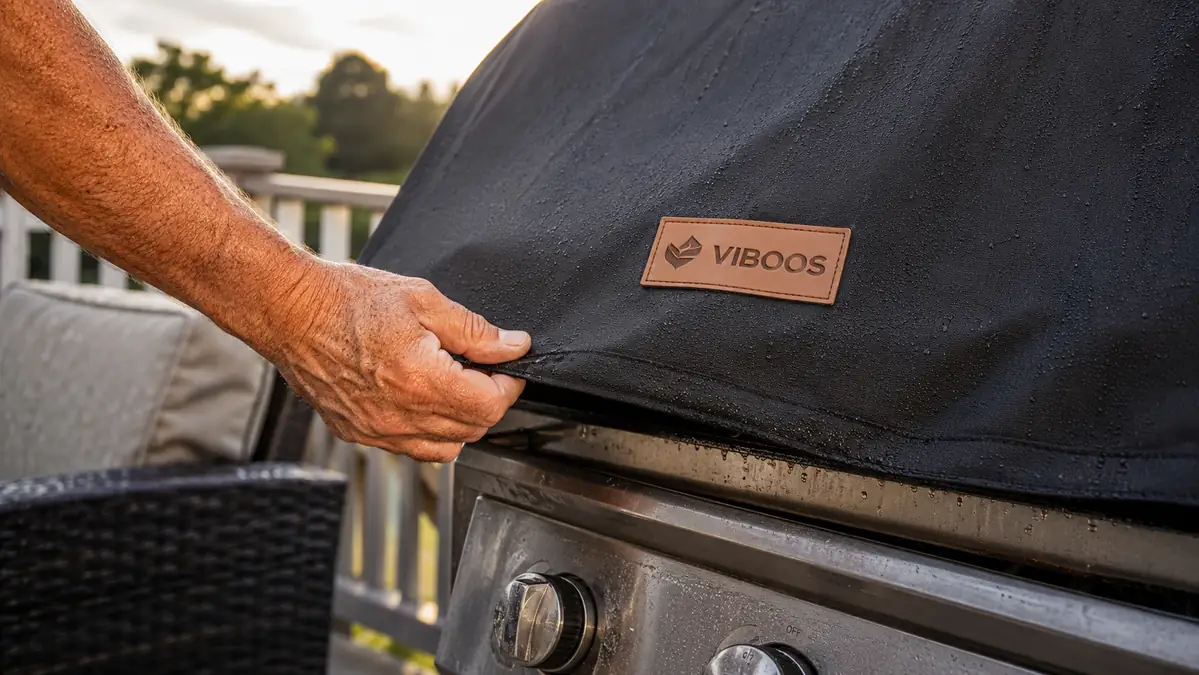
The VIBOOS cover ships folded down tight into a fairly small package, which makes sense for shipping costs, but it means the fabric comes out of the box with sharp, pressed-in creases running across it like the fold lines on a road map. Mine draped over the grill lopsided for the first several days, the fold lines refusing to lay flat no matter how I smoothed them out by hand. I'll admit my first impression standing there in the driveway wasn't confidence, it was closer to disappointment, because it looked thin and wrinkled instead of the sturdy, rip-proof material the listing described.
It took roughly two weeks of regular use, on and off the grill every day, before the creases relaxed enough that the cover started draping the way I expected from the start. I kept an eye on those crease lines longer than the rest of the fabric, worried that repeated folding stress in the same spots would be where UV damage or cracking showed up first, the same way a firehose develops weak points at its fold marks if you store it wrong for too long. A year later those original crease lines are still there if you look closely under bright light, but they haven't cracked or gone brittle. Still, if you unbox this cover expecting it to lay smooth and confident like a store display model, temper that expectation. It needs a couple of weeks to relax into shape.
What I Found Underneath on Muggy Mornings
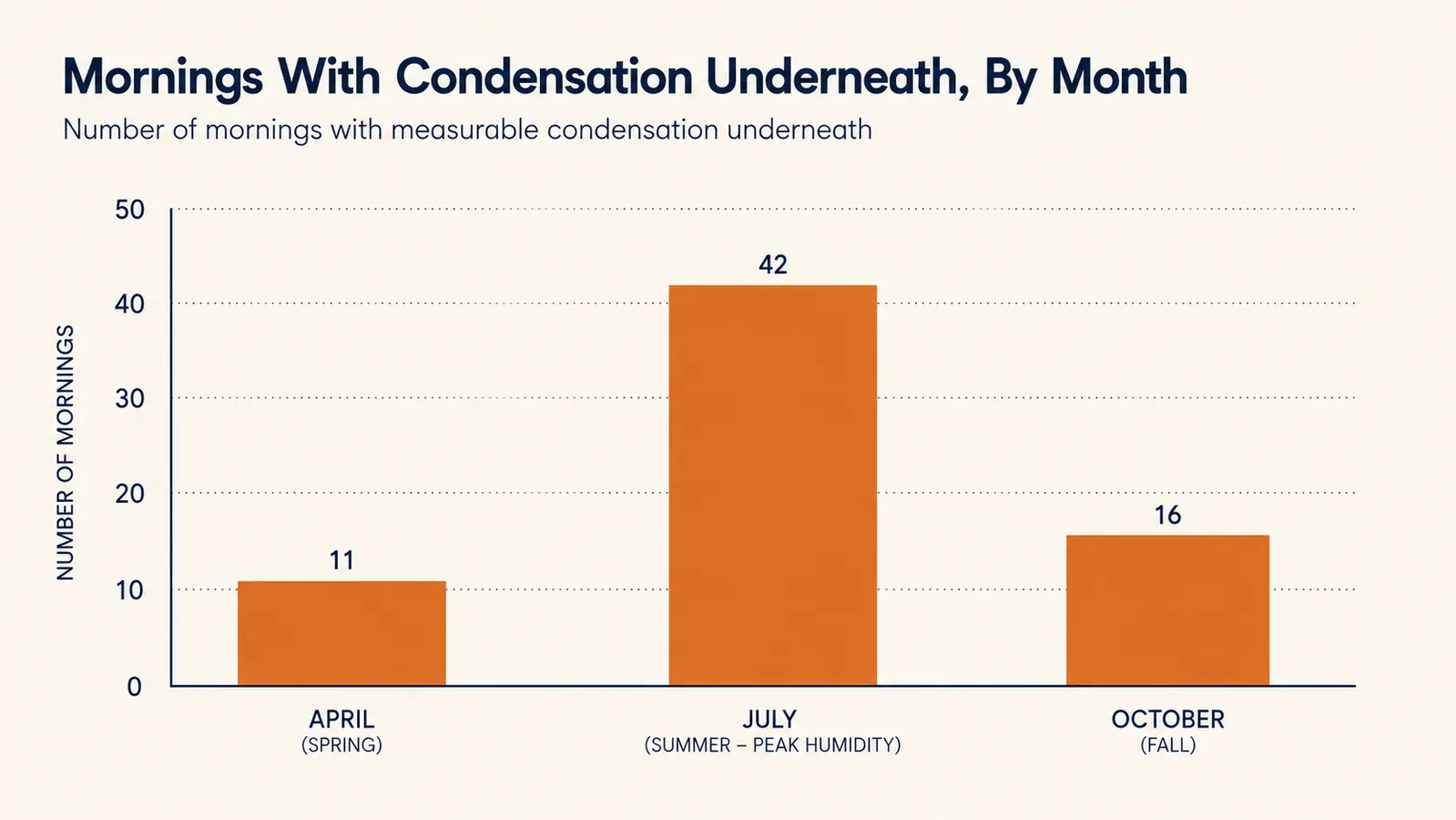
Here's the part that surprised me most, and it's the kind of thing you only catch if you actually lift the cover and look rather than trusting it from a distance. The VIBOOS cover has no vents, which is fine for keeping rain and salt spray out, but during the thick of a coastal North Carolina summer, when the air stays warm and heavy well into the night, I started finding beads of condensation on the underside of the hood most mornings. Not puddled water, nothing dramatic, but enough moisture that I could run a finger across the metal and come away damp.
It makes sense once you think about it. A dark, tightly sealed cover traps whatever warm air is left in the grill after it cools, and when the temperature drops overnight, that air condenses against the metal the same way it does inside a closed car windshield on a humid morning. Over that two-week stretch I tracked it closely, I found visible moisture underneath on roughly half the mornings, more often during the heaviest humidity in July and August, almost never in the drier stretches of spring and fall. I haven't seen any rust develop from it yet, and I check the burner tubes and control knobs regularly out of habit, but it's a real limitation worth knowing about if you live somewhere humid. During the worst of that summer stretch, I started propping one corner of the cover up an inch or two on hot, still nights just to let a little air move underneath, and that noticeably cut down on the morning dampness.
The Smell Problem, and How I Fixed It
This one's on me as much as the cover, but it's exactly the kind of real-world mistake I think you should hear about before you make it yourself. A fast summer storm rolled through one evening while I was helping Danny load a trailer for a move across town, and by the time I got back it was already dark and pouring. I threw the cover over the grill without really checking whether it had dried from an earlier rinse, folded a spare one over it, and honestly forgot about the whole thing for close to ten days during a busy stretch at work.
When I finally pulled the VIBOOS cover out of the storage bin to swap it back on, it had picked up a faint musty smell, the kind you get from a damp towel left balled up in a gym bag too long. Nothing had grown visibly on it, no mildew spotting that I could see, but the smell was unmistakable enough that Donna made a face and told me to deal with it before it went anywhere near her patio furniture. I hosed it down thoroughly, scrubbed the seams lightly with a mild soap and a soft brush, and hung it over the fence line to air dry for a full day in direct sun. The smell was mostly gone after that, and it hasn't come back since, but it taught me something the listing doesn't mention anywhere. This isn't a cover you can treat like an old tarp and fold away wet without consequences. Give it a chance to dry first, every time, or you'll end up doing the same cleanup I did.
Sizing Is Generous, Which Cuts Both Ways
On my full-size gas grill, the 58-inch VIBOOS cover fits with a little extra room at the shoulders, which I've always chalked up as a minor plus since it lets some airflow move underneath. But when Mark tried the same size cover on his smaller, oddly shaped tailgate grill for a few weeks, the extra room turned into an actual problem instead of a mild convenience. There was so much loose fabric bunched around the base that a steady breeze had it flapping audibly against the metal legs most of one windy night, loud enough that he texted me a video of it slapping around like a loose tent flap at two in the morning.
The drawstring hem helps some, but it can only cinch so much extra fabric down before you're left with folds and bunches instead of a clean fit. On a grill shaped close to mine, standard rectangular body, roughly 58 inches around, it works well. On something narrower, rounder, or with an unusual footprint like Mark's portable unit, you're likely to end up with more slack fabric than you'd want, and that slack is exactly what catches wind and starts flapping in the first place. My honest advice here is to actually measure your grill's width, depth, and height before ordering rather than trusting the general size label, because generous sizing is only a benefit if it roughly matches the shape you're covering.
Where It Still Earned My Trust
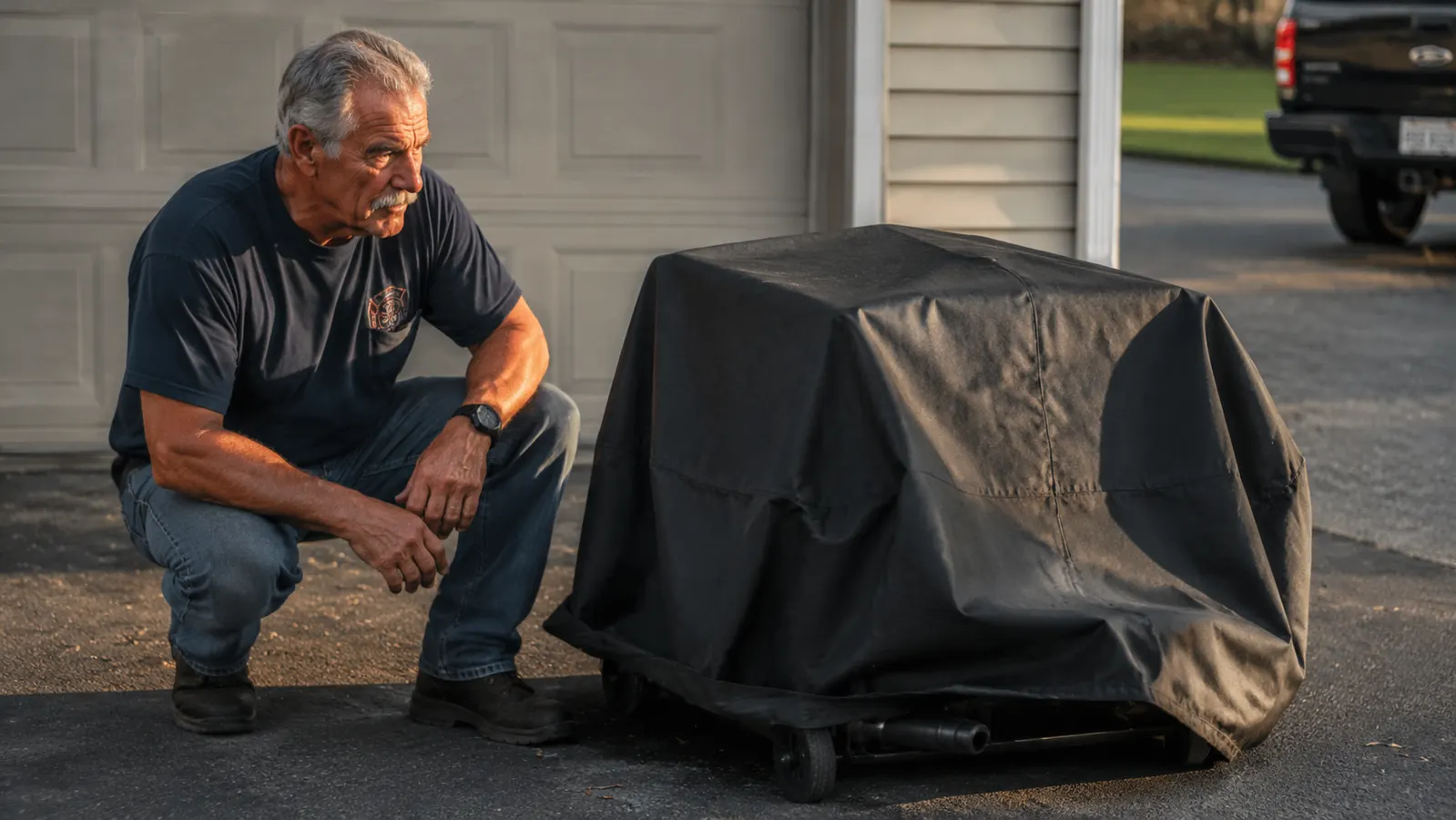
None of this means I regret buying it, and I want to be fair about that. Even with the condensation issue, I haven't found actual rust starting anywhere on the grill, just morning dampness that clears up once the sun's been out a while. Even after the musty-smell mistake, a proper wash and a day of air drying brought the fabric back to normal with no lasting stain or stiffness. The seams held through all of it, no fraying at the stitching even after Mark's cover got tangled and yanked pretty hard trying to free it from a gust one night.
The pollen test came out clean too. A hard rinse with the garden hose knocked the yellow film right off without leaving a stain behind, which is more than I can say for the porch rail it was sitting next to. For fourteen dollars, these are manageable annoyances rather than dealbreakers, the kind of thing you learn to work around within the first month rather than something that ruins the product. I just wish the listing said so upfront instead of leaving me to find out by trial and error.
What We Liked
- Rip-proof fabric held up through Mark's windy tangle without fraying at the seams
- Rinses clean after a heavy pollen season with no staining
- Water still beads and rolls off rather than soaking through
- Fits a standard rectangular gas grill well once the fold creases relax
- Affordable enough that the learning-curve annoyances are easy to forgive
Where It Falls Short
- Ships with deep fold creases that take a couple weeks of use to fully relax
- No vents, so humid nights can leave condensation under the hood by morning
- Picked up a musty smell after being folded away damp for about ten days
- Generous sizing turns to loose, flapping fabric on smaller or oddly shaped grills
- Drawstring hem can only take up so much slack if your grill isn't close to the standard shape
None of these were dealbreakers, but every one of them was something the listing never mentioned. That's the part I wanted to give you before you spend your money, not after.
Who This Is For
If you've got a standard rectangular gas grill, roughly matching the 58-inch dimensions, and you're willing to do two small things, let it dry before you fold it away and give it a couple weeks to relax out of its shipping creases, this cover earns its price several times over. It's a good match for anyone who wants real protection without spending real money, and who doesn't mind a little upkeep in exchange for that. If you're patient with a new product's first couple weeks and you check on your gear now and then rather than forgetting it exists until something goes wrong, you'll likely end up as satisfied as I did once the rough edges wore off.
Who Should Skip It
If your grill is small, round, or an unusual shape like Mark's tailgate unit, measure carefully before you order, or look at a size made specifically for that footprint instead, because the extra fabric will bunch and flap more than it protects. And if you live somewhere with heavy, sustained humidity and you're not willing to occasionally prop a corner or let the grill fully cool and dry before covering it, a vented cover built for that climate might serve you better than this one. It's a good, honest product for the price, just not a flawless one, and now you know exactly where the rough edges are before you spend a dime.
Know the quirks going in, and this one's a smart buy
Now that you've got the full picture, fold creases, condensation, sizing and all, the VIBOOS 58-inch cover still holds up where it matters most for the price.
Amazon Check Today's Price on Amazon →